February 15, 2021, Updated May 17, 2024
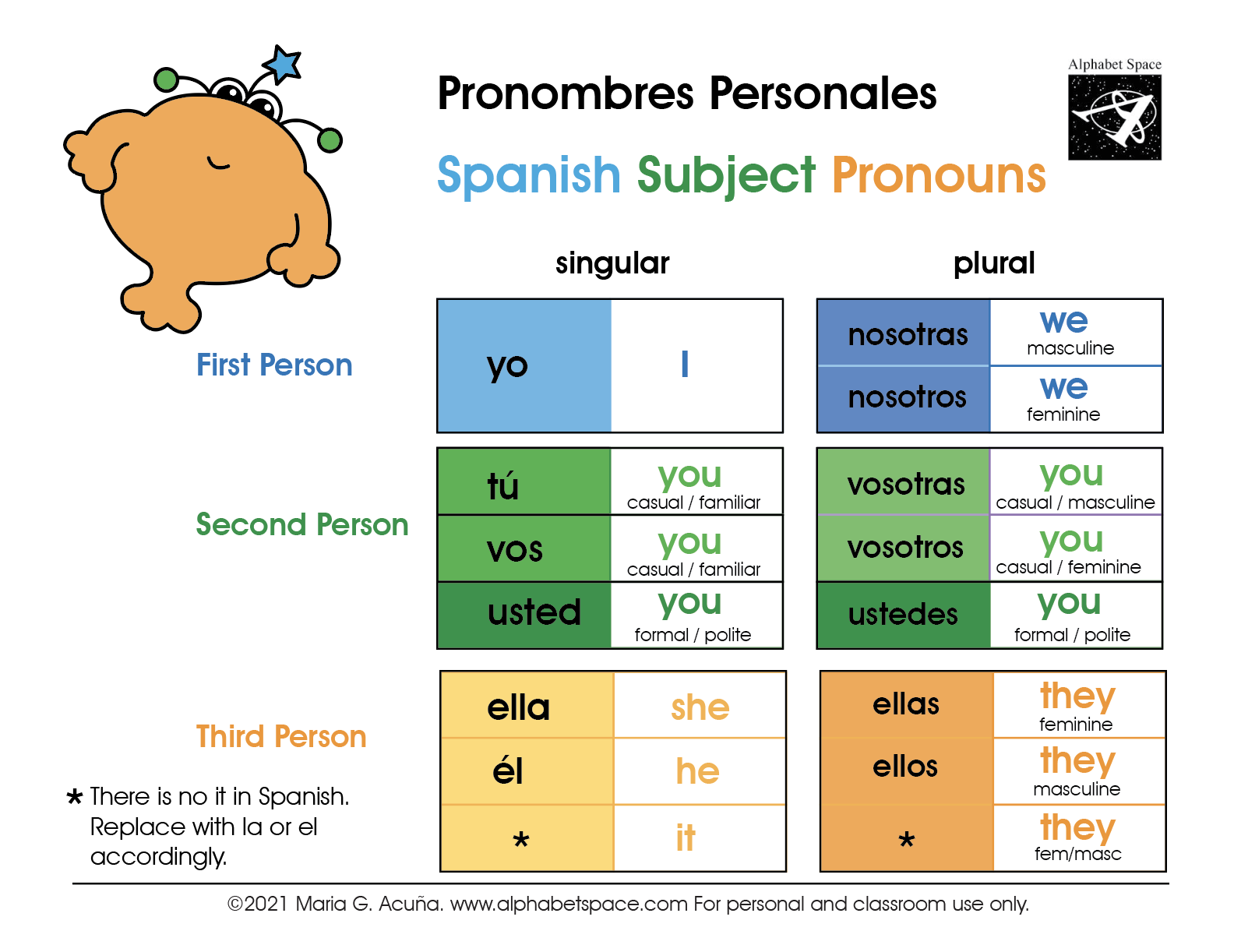
Today, I created a chart that explains with color coding the subject pronouns in Spanish. I start teaching I (yo) in Kindergarten through Second Grade students. Then in Third Grade I introduce he, she and it. There is no “it” in Spanish and this is really hard for students to grasp at the beginning. Basically you look at the ending of a noun and that determines whether an object is feminine or masculine and then use la or el.
For example: horse = caballo, so then it would be el as caballo’s las vowel is o
The rest of the subjects I introduce in the Fourth Grade save for “vosotros”. I find that “vosotros” is so close in pronunciation to nosotros that it tends to confuse them. Also this subject does not exist in English so it makes it even harder for students to understand what it is they are saying when they are using it. “What is the difference between nosotros and vosotros?” they ask… I usually say, “Well, it’s like a subject somewhere between you and we but it’s plural! ^ ^ If you have heritage students then it’s fine to add it to their list.
Here is the chart:

Did you notice vos?
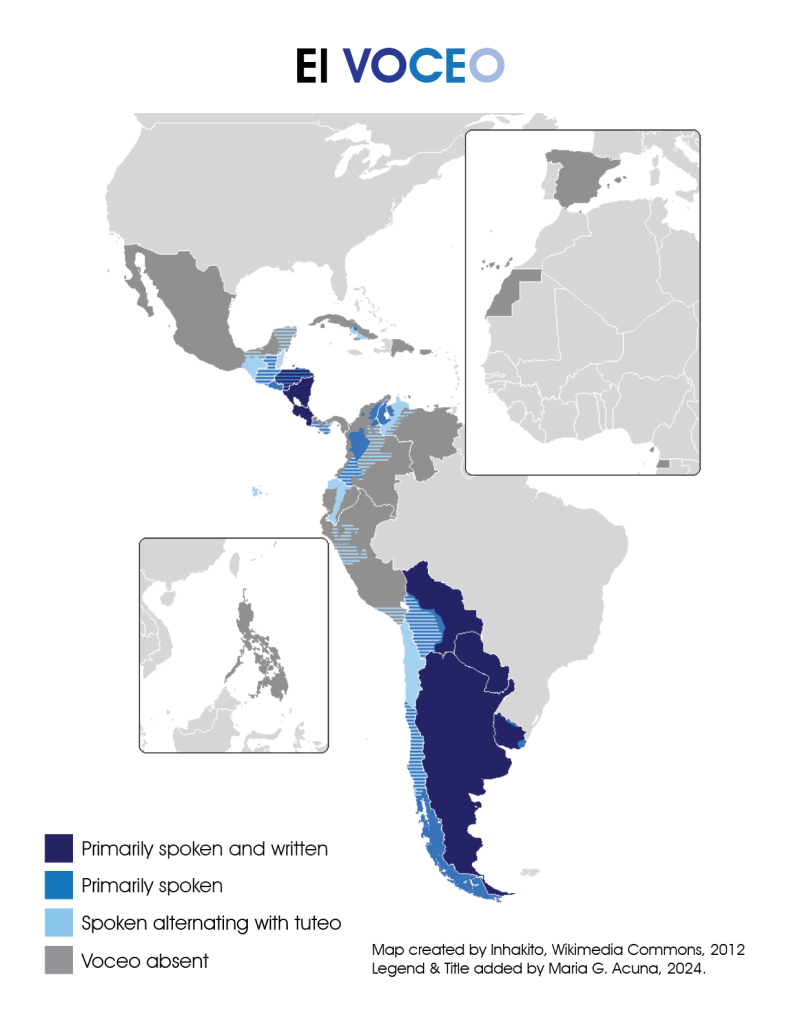
In many Latin American countries, vos takes the place of tú. This is called voceo and it is form that has been used since colonial times in many countries in Latin America, and a different form was used in Spain even further back in time. Latin American voceo was incorporated officially into the Spanish Language in 2005. I personally do not teach voceo to my elementary students. But I feel that it is good to let them know that it exists. Voceo brings another level of changes in verbs and grammatical structures that I feel would be also too much for my young students.
This is a chart that shows where voceo is used:
 Alphabet Space