Learning Spanish as a Second Language is simple and fun with the Spanish books for children, parents and teachers we create at Alphabet Space.
Children will enjoy the activities and games that will help them learn Spanish and about the culture of Spanish speaking countries.
Parents will find books filled with everyday phrases and simple activities that using the daily routine as a base, will help teach and reinforce Spanish on a daily basis. These Spanish books can also be used with homeschool students. Browse the tabs on the top, to start learning and teaching Spanish in a simple and fun way!
Elementary Spanish Teachers can enrich their Spanish curriculum in the Kindergarten and Elementary level with books that include simple Spanish lessons with reproducible activities, worksheets, visual aids and games with interesting and useful Spanish vocabulary, Spanish grammar and Spanish phrases.
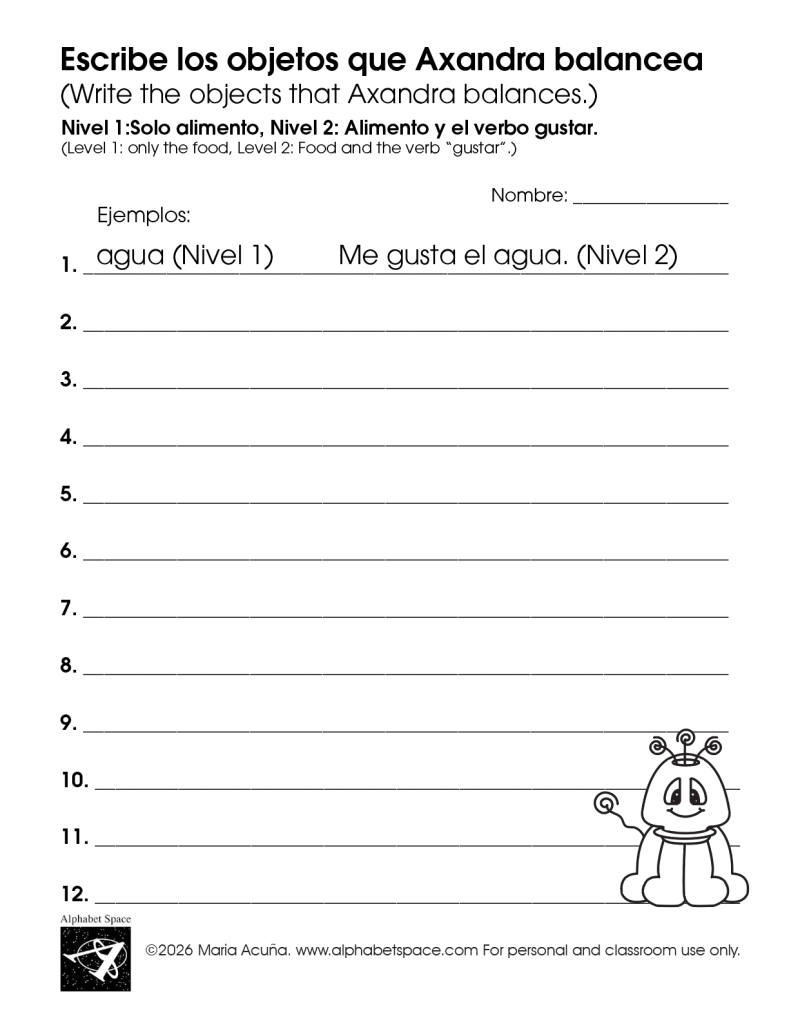
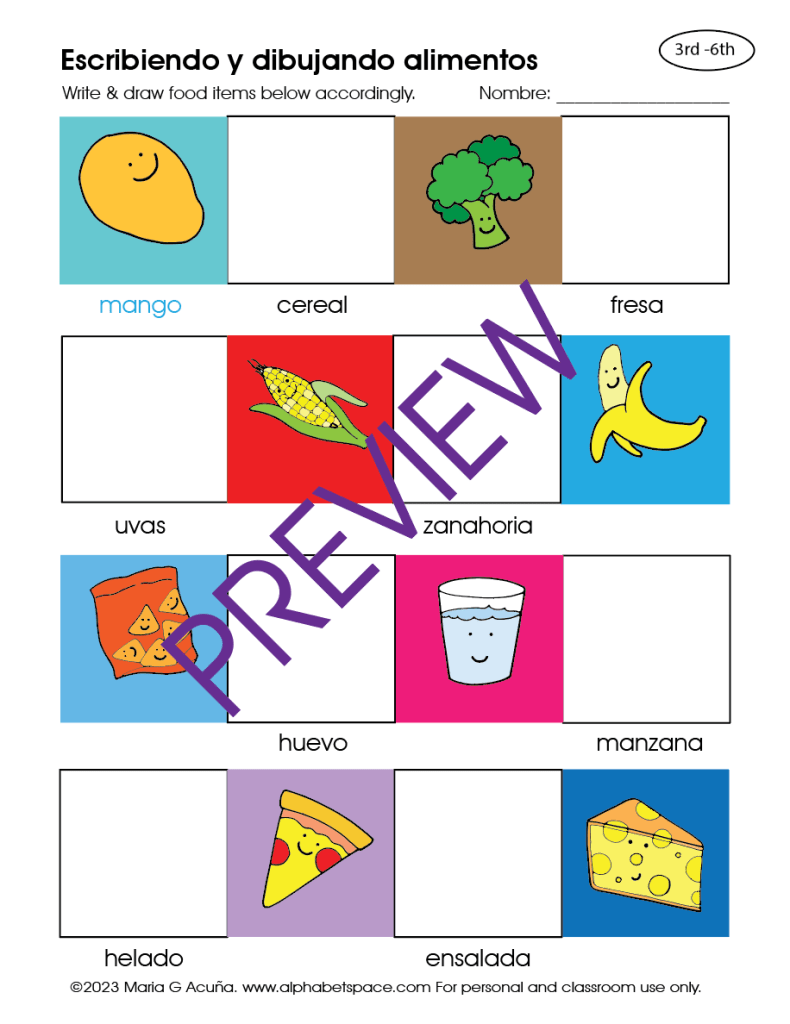
¡Hola! Looking for a fun activity to do with your students that will help them practice food items and the verb “gustar”(to like) in Spanish? Use this video! It is a I spy game! It has two practices and 3 I spy games!
These are the worksheets you can complement the video with:
Another fun activity you can do after children color the items in, it to cut out the items and hide them in a space like a living room or part of the classroom, students then take turns trying to find them as a sort of easter egg hunt. Then as they find them they describe them. You can help them by saying…”estas caliente” (you are hot …getting close), or “estás frío” (you are getting cold!).
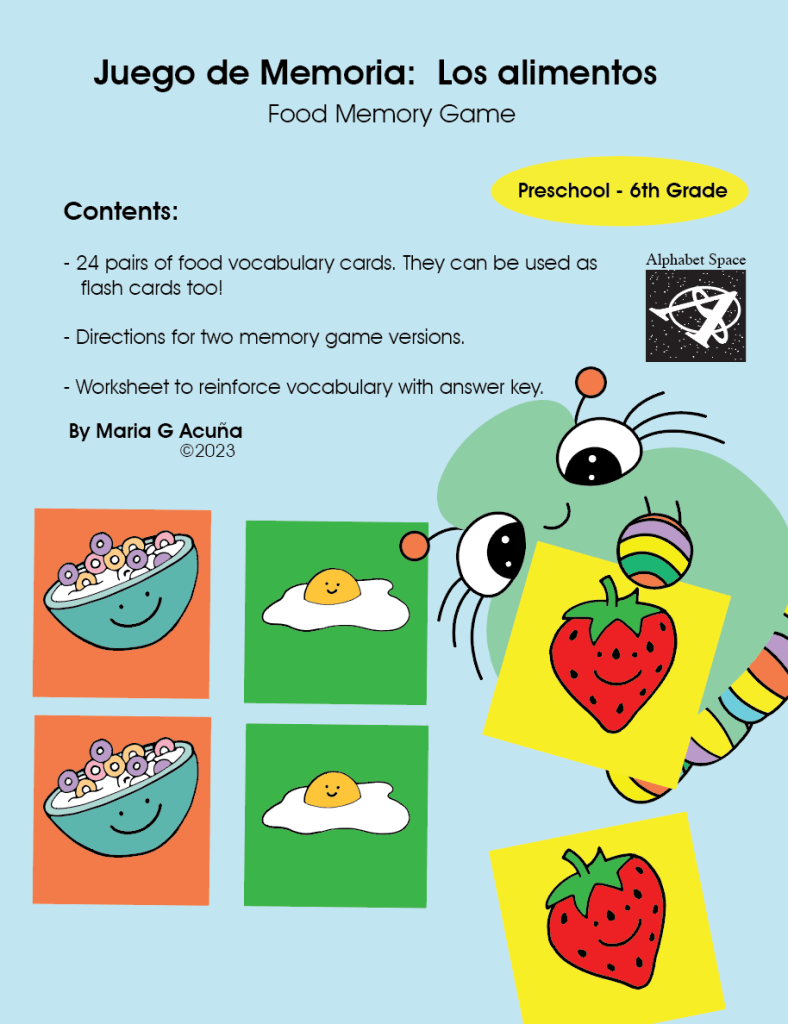
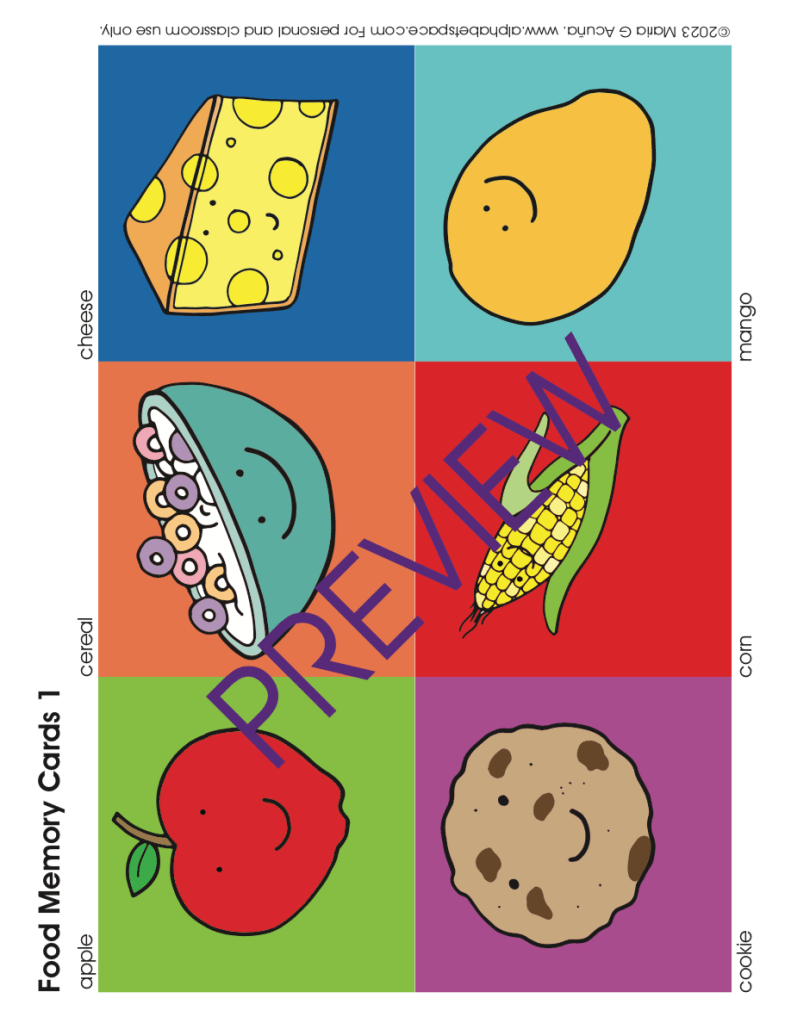
Here is also a match game I created, you can use its cards in the previous game as well! It includes worksheets too and can be found HERE. There is a more complete preview there too!
¡Hola! Ever since COVID I realized how great it is to project slides to teach Spanish. All kids no matter where they are can see a colorful screen! SO… I started the section RESOURCES TO TEACH SPANISH REMOTELY as an option to place some of the slides I was using to teach Spanish. (They are free!)
About two months ago, January 25th, 2025 to be exact, I realized that maybe I could build up on this idea, to create something longer that could be used to teach and to learn at the same time. So I finally created my first one! You can see it below. Try it and let me know what you think!
..And don’t forget to like and subscribe as I plan to make many more!
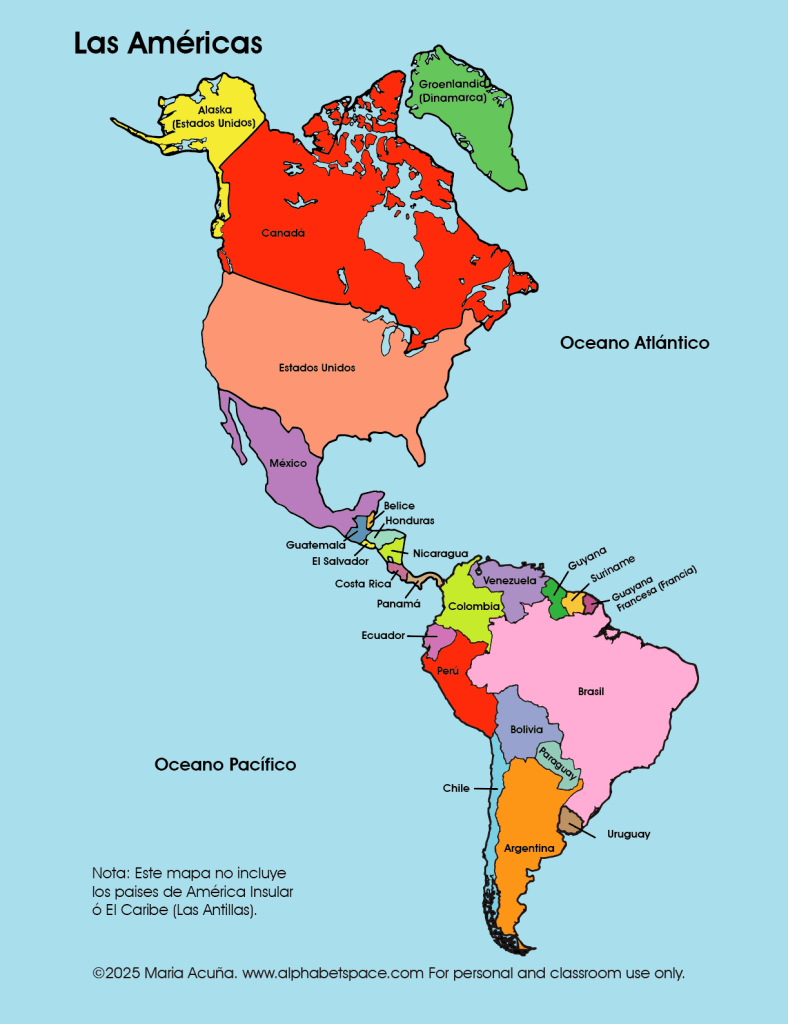
Las Américas ó América es el segundo continente más grande del mundo. Tiene 35 paises independientes y 25 territorios dependientes de Estados Unidos, Reino Unido, Dinamarca, Francia y Países Bajos. América se puede dividir de varias formas pero la más popular en la actualidad es en América del Norte y América del Sur. América Central y América Insular (ó el Caribe) forman parte de América del Norte.
A continuación comparto un mapa ayuda a practicar los países de América, (no incluye las islas del Caribe por la dificultad de sus diminutos tamaños). En el futuro crearé otro mapa específicamente de esta area.
Are you looking for a way to start practicing reading comprehension in Spanish? Or perhaps your children or students? Well I decided to recreate my recent reading comprehension texts as videos that anyone can use at anytime. You can even pause the video and try to answer the questions to then see the answers by going to the next section in the video… ! I started this week and my goal is to do one every week! Take a look at the first one:
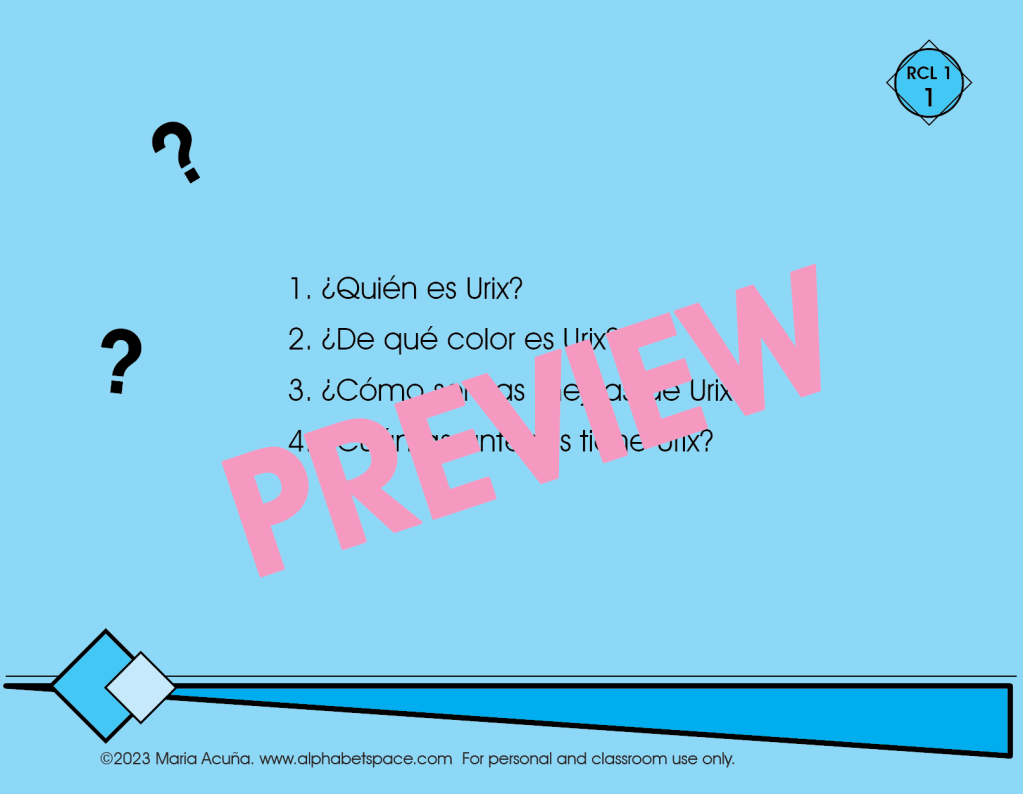
This is RCL 1.1 and it covers description. It is great if you have been practicing colors and size related adjectives to describe. Check the topic list below… so you see what will be coming next week!
Ever wonder what you can do to support and help your students that already speak Spanish develop their more advanced reading skills in Spanish?
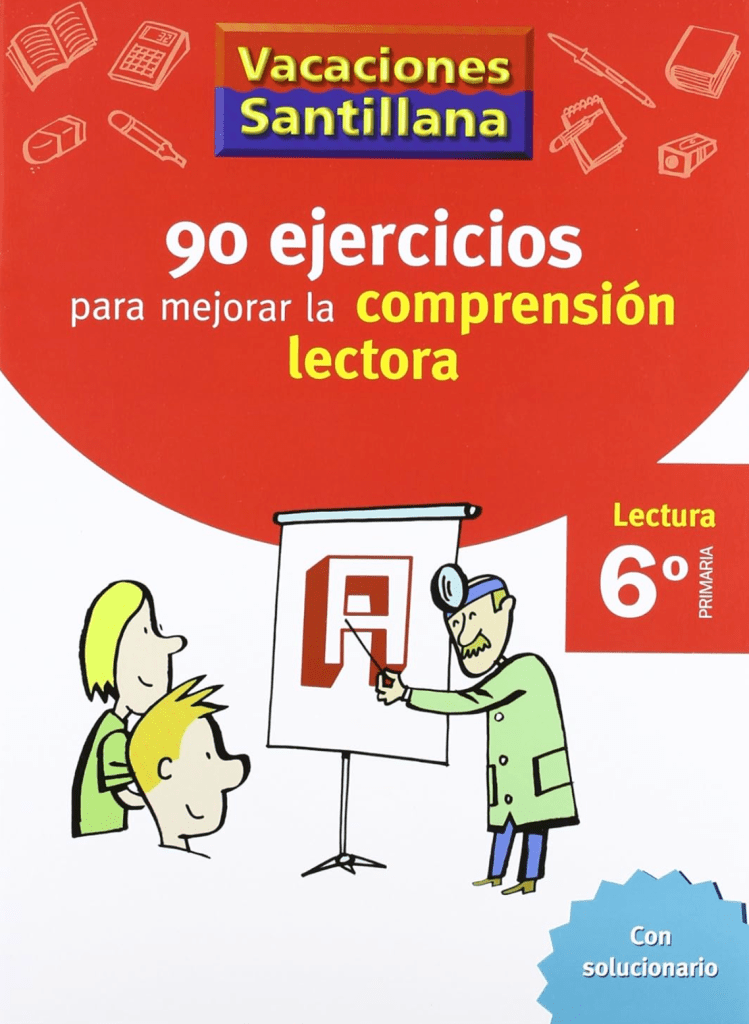
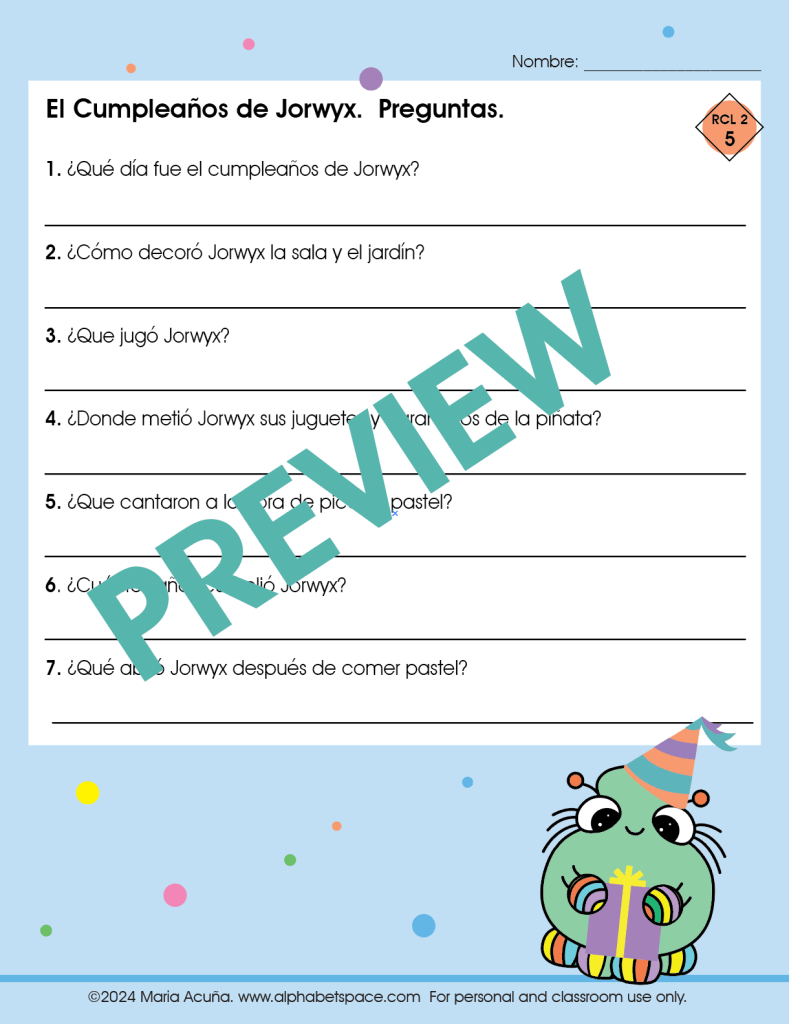
One thing I use in class are short (two page) reading comprehension texts with questions. I really like the Santillana “Vacation” workbooks for this. This is one of them:
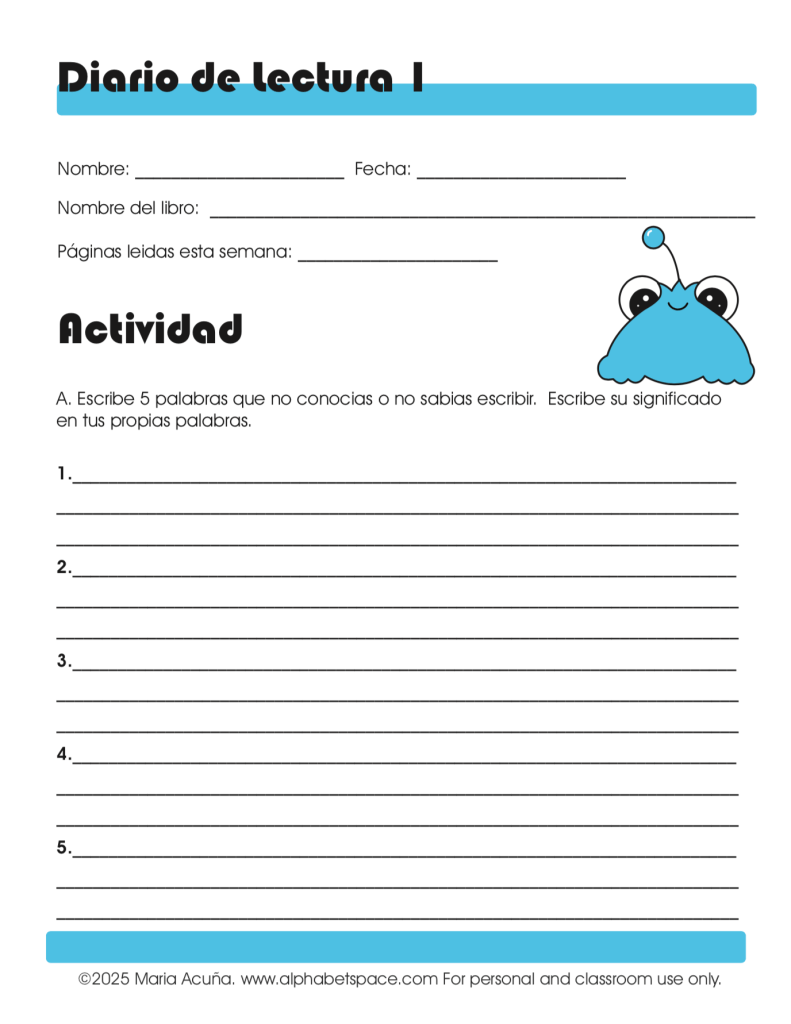
One thing I’m trying this year is having them read a book in Spanish at home. I think this is a wonderful way to have students develop their vocabulary and read more fluently in Spanish. Every week they will fill in a reading diary that includes an activity they have to do based on what they read. These activities are nor reading comprehension questions, they are grammar related. See some below:
*As an Amazon Associate I earn from a qualifying purchase. *www.alphabetspace.com is a participant in the Amazon Services LLC Associates Program, an affiliate advertising program designed to provide a way for websites to earn advertising revenues by advertising and linking to Amazon.com.
¡Hola! These past weeks I have been working on new series of books that I hope will help children read and practice vocabulary words in Spanish.
The first of these books is called “Urix y los objetos.” It is about Urix (one of my alien creatures) and classroom objects. This book comes from far back (1992!) and I finally decided to publish it digitally. This is the cover:
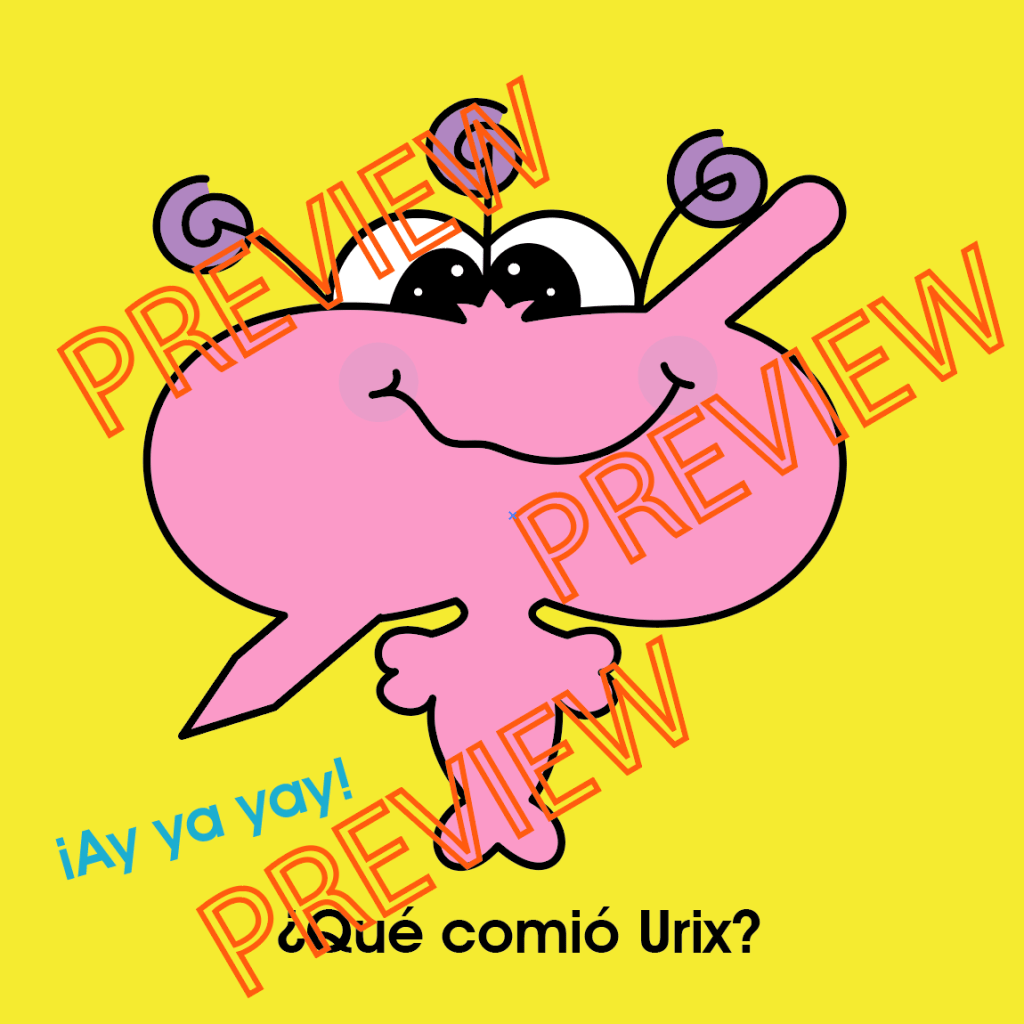
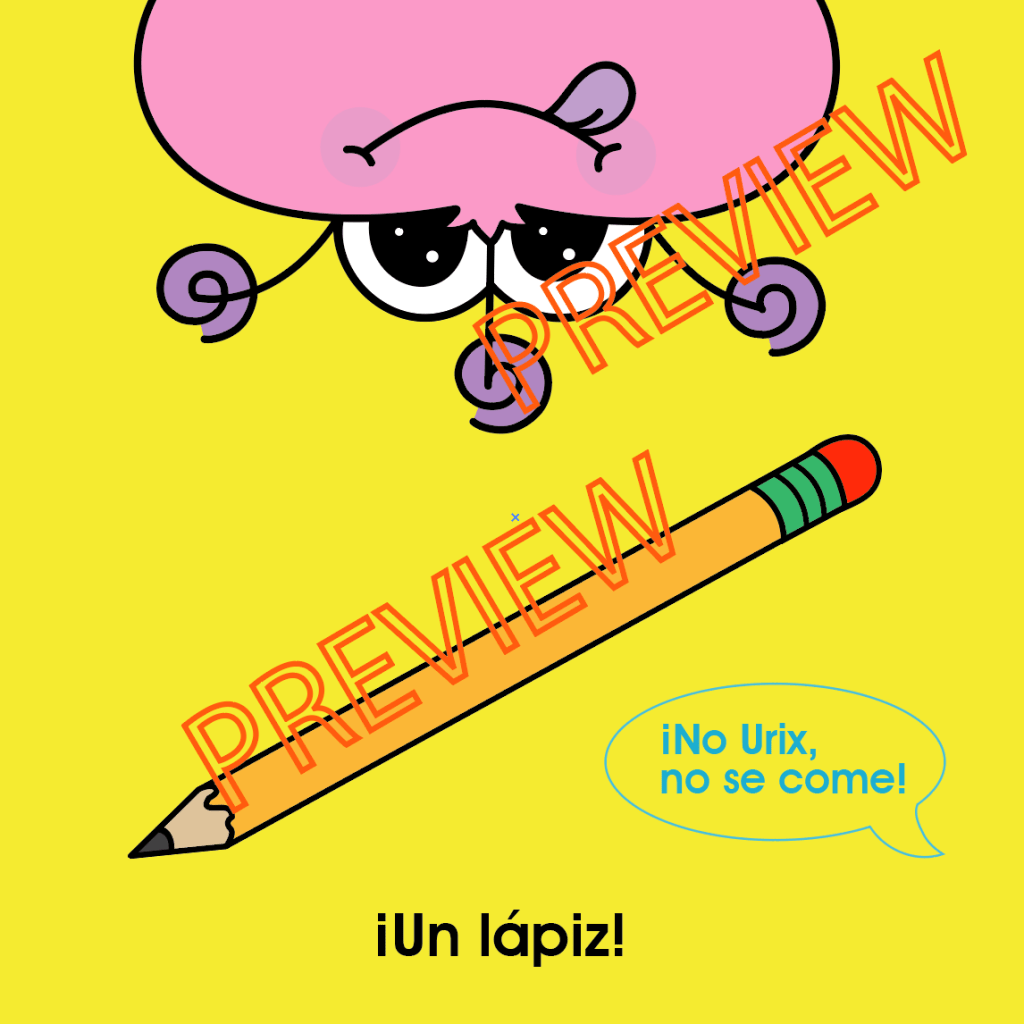
What is really fun about this book is that Urix eats a classroom object and the child has to guess what the alien ate then the next page tells you.
Some of the pages are really funny:
And at the end of the book, Urix invites kids to try and remember all the objects he tried to eat. This provides one more opportunity for children to practice the words.
Purchase options:
You can buy with Paypal and receive a PDF via email ( allow 24 hours):
Digital Book: Urix y los objetos
$3.99
You can also get a Kindle Digital version at Amazon* right HERE, or an immediate file through Teachers Pay Teachers HERE.
I plan to continue creating 4 or 5 books in this series that will touch on other useful vocabulary with other creatures! So come back soon!
¡Muchas Gracias!
*www.alphabetspace.com is a participant in the Amazon Services LLC Associates Program, an affiliate advertising program designed to provide a way for websites to earn advertising revenues by advertising and linking to Amazon.com.
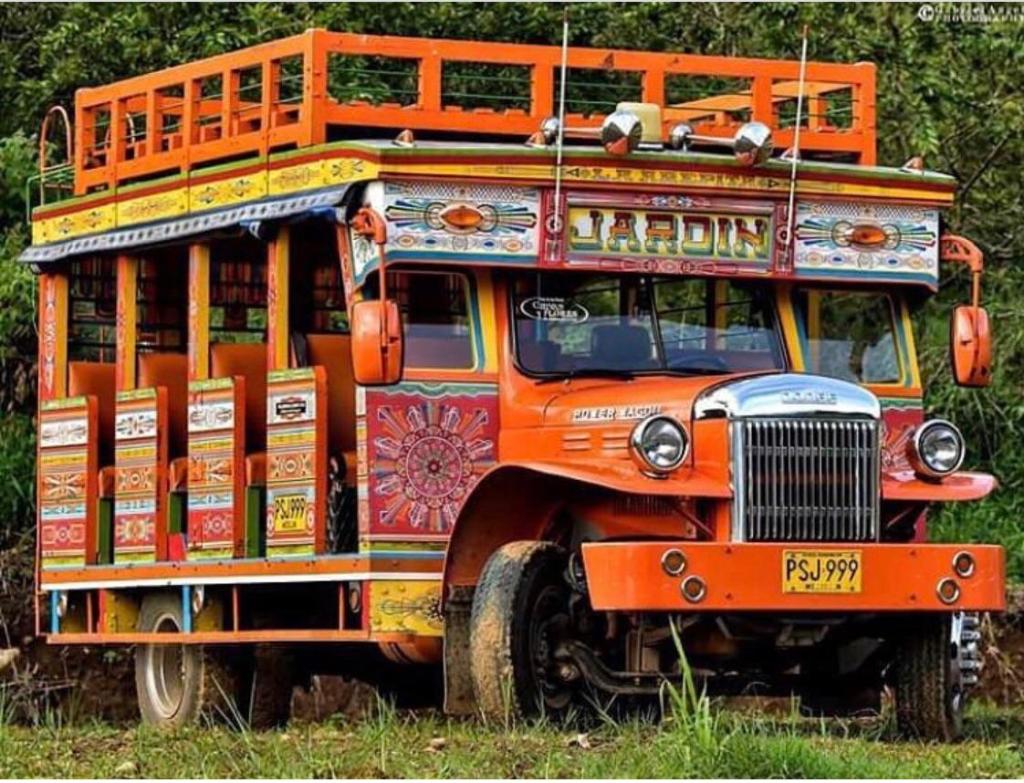
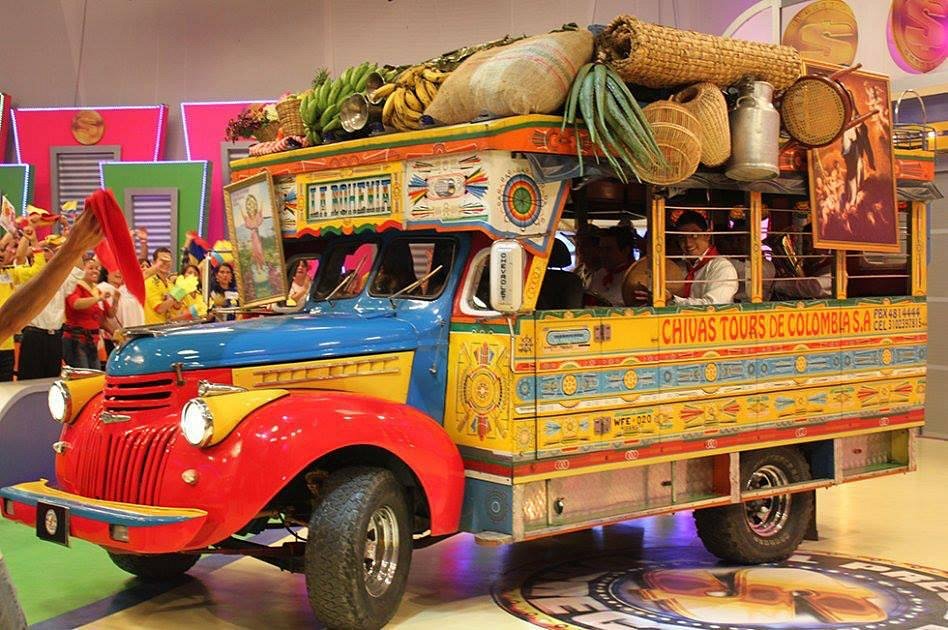
As I was looking through the different aspects of Colombia’s culture, I read about Chivas or Escaleras, a mix between a bus and a truck used for transportation of people and goods. I thought my students would really love learning about them and creating related art. I was specifically thinking of first and second graders, as I cover transportation in Spanish in these grades.
The Chiva, a Colombian icon, emerged in the early 20th century in the Antioquia Department. At that time, horse-drawn carriages were the primary mode of transport for the region’s farmers. In 1908, a breakthrough occurred when Colombian engineer Luciano Restrepo and mechanic Roberto Tisnes imported a chassis from the United States and constructed the first bus body in Medellín. This pioneering vehicle serviced the route between Medellín’s city center and the town of El Poblado. Initial models were basic, featuring a canvas roof and wooden benches. Later versions incorporated roof racks to accommodate farmers’ goods and more seats.
Chivas continued to evolve and today there is a second type of Chivas used for partying especially in Cartagena de Indias. It is how I came to know them, as a tourist in Cartagena. They are called Chivas Rumberas.
Even thought they are used for different purposes, they both share one thing in common, (aside the build of the tranport), their colorful, beautiful and detailed geometric decor. Why are they called Chivas? Because their horn make a sound that to some Colombians sounded like a goat, so that’s what they called them: goats in Spanish.
I found this great video that showcases some of their history, characteristics and how they are made, my students were totally fascinated:
And this is a Chiva Rumbera in action. Please note that there is drinking going on… so make sure you watch it ahead and select what you think would be appropriate for your students.
And… there is a flower parade in Medellin every year that includes Chivas:
Activity 1 : The easiest. Drawing a Chiva.
I decided to have my students draw their very own Chivas. I told them that they could be birthday party ones… if you were going to celebrate your birthday in one what would it have? The results were so creative and whimsical.
The last one. LOL!
For reference, I printed some Chivas for them to look at. I’ve included them below. And… I gave my students some Colombia clip art I printed, that is why you see some cut out flags and typical Colombian items: hats, etc.
Cr. Wikimedia Commons, Yves Picq Cr. Reddit
The following image was very useful as many chose to do it sideways as it is easer to draw.
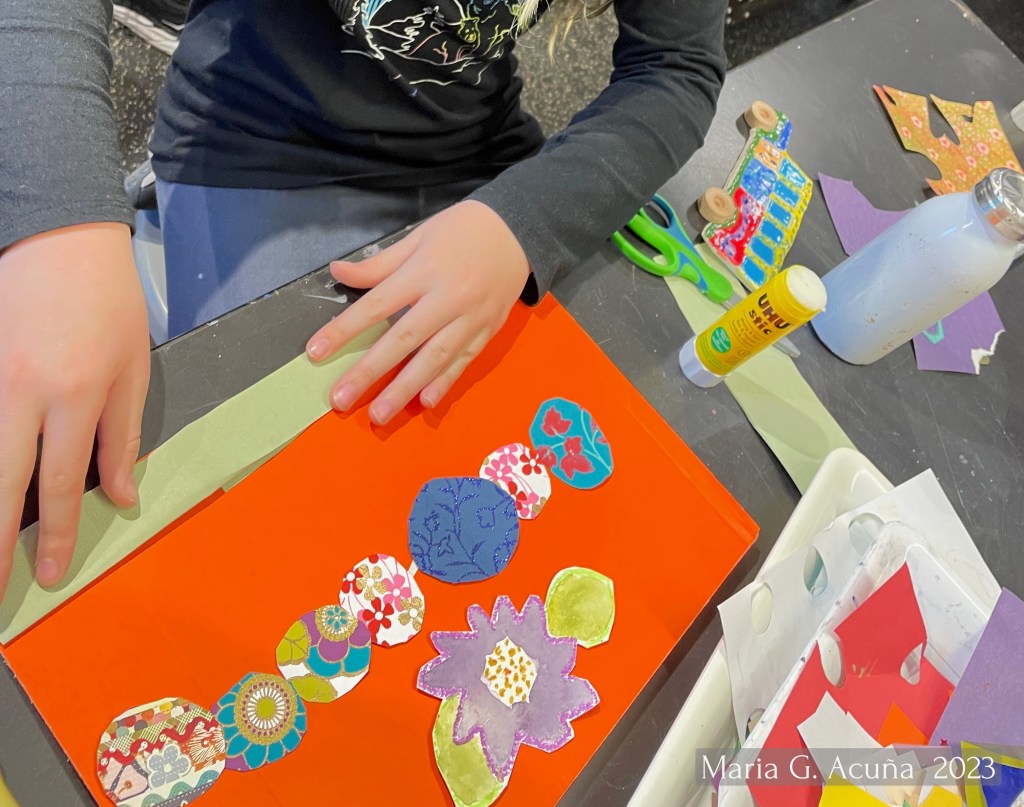
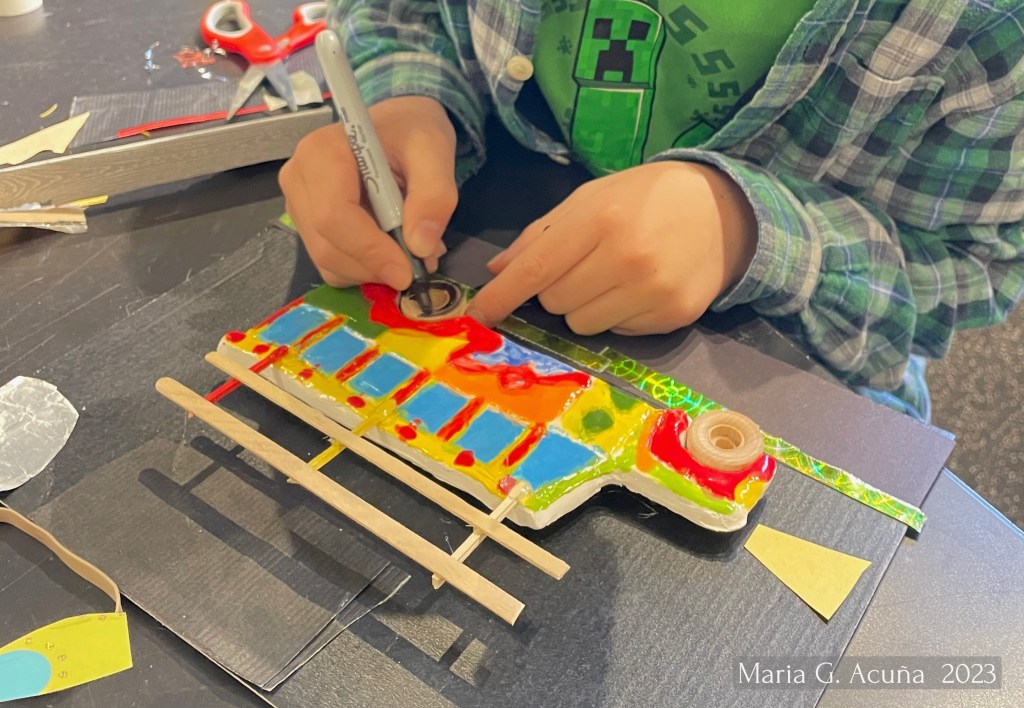
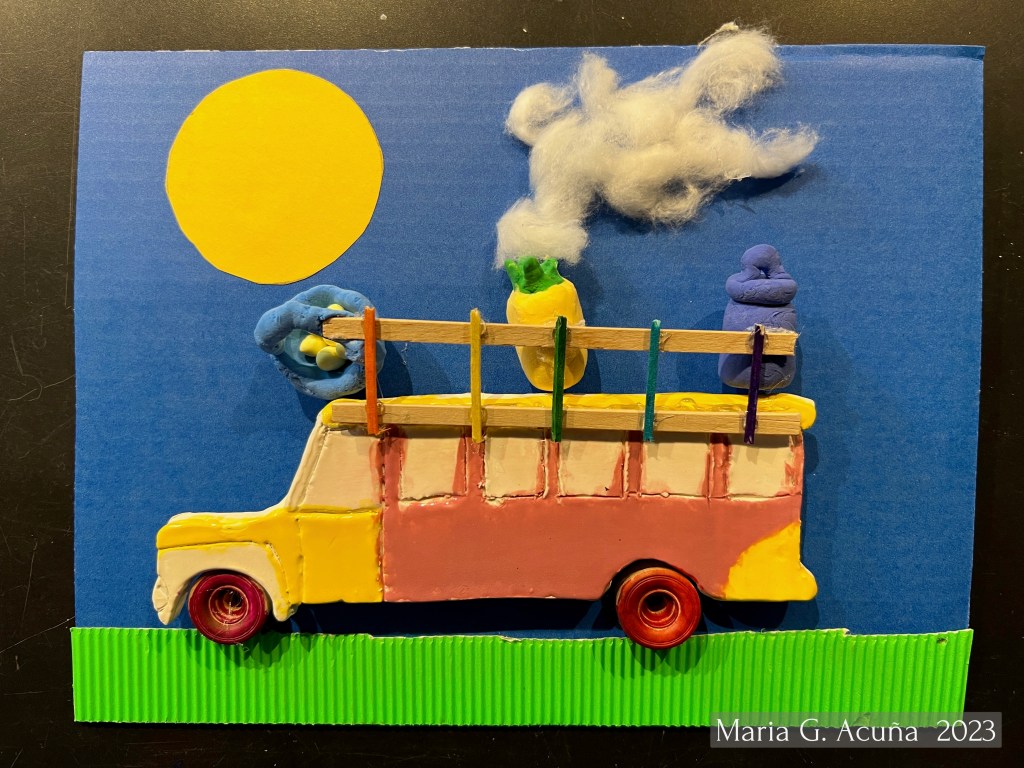
This activity took about 4 classes to complete. I worked in collaboration with the Art teacher at our school. She did the first part: she made a model of the Chiva, a tracer that students used to trace onto a ceramic slabs of clay. Students then textured in windows and doors. After they were fired in a clay oven, students painted them using air dry paint of different colors. The Art teacher collected many little items that they could use to create racks and she purchased the wheels.
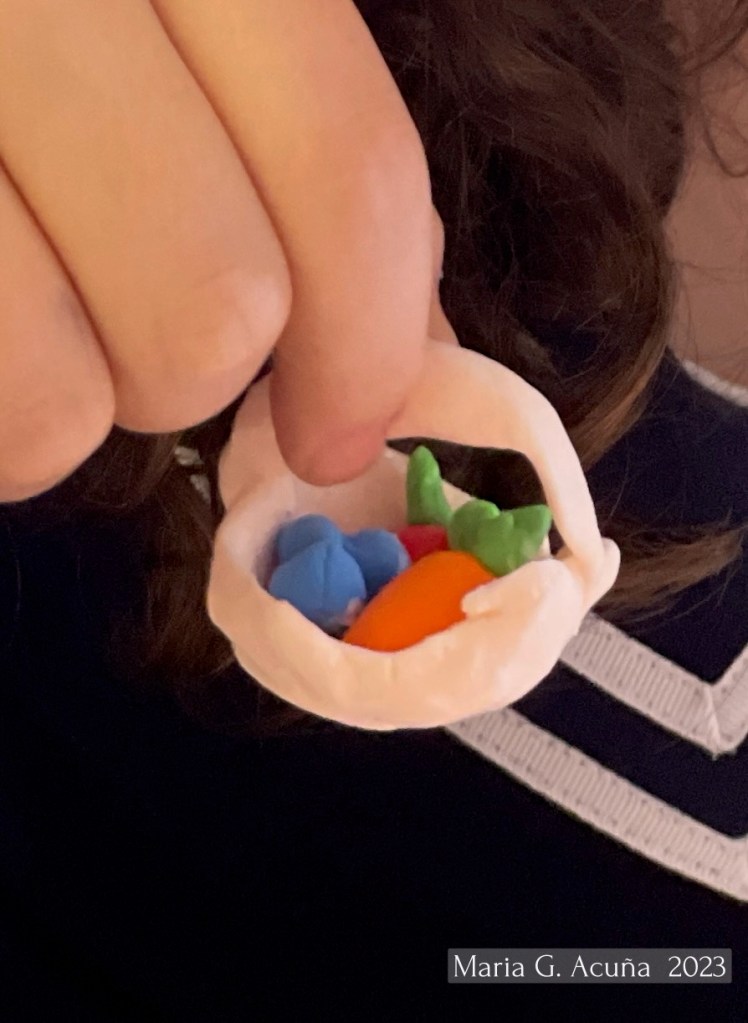
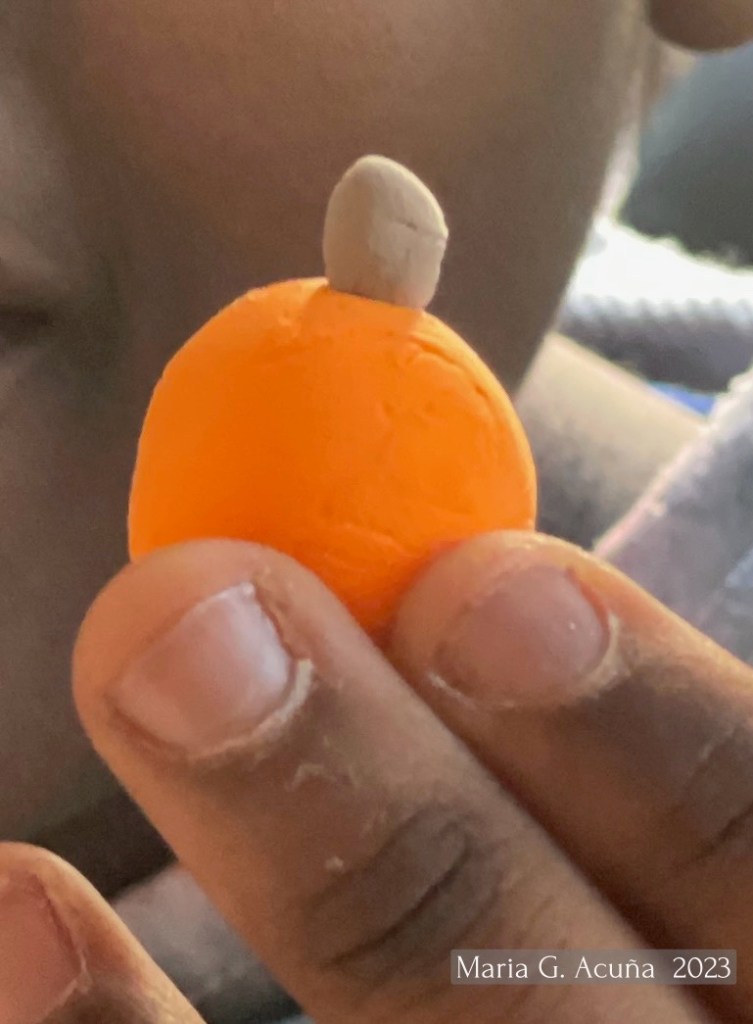
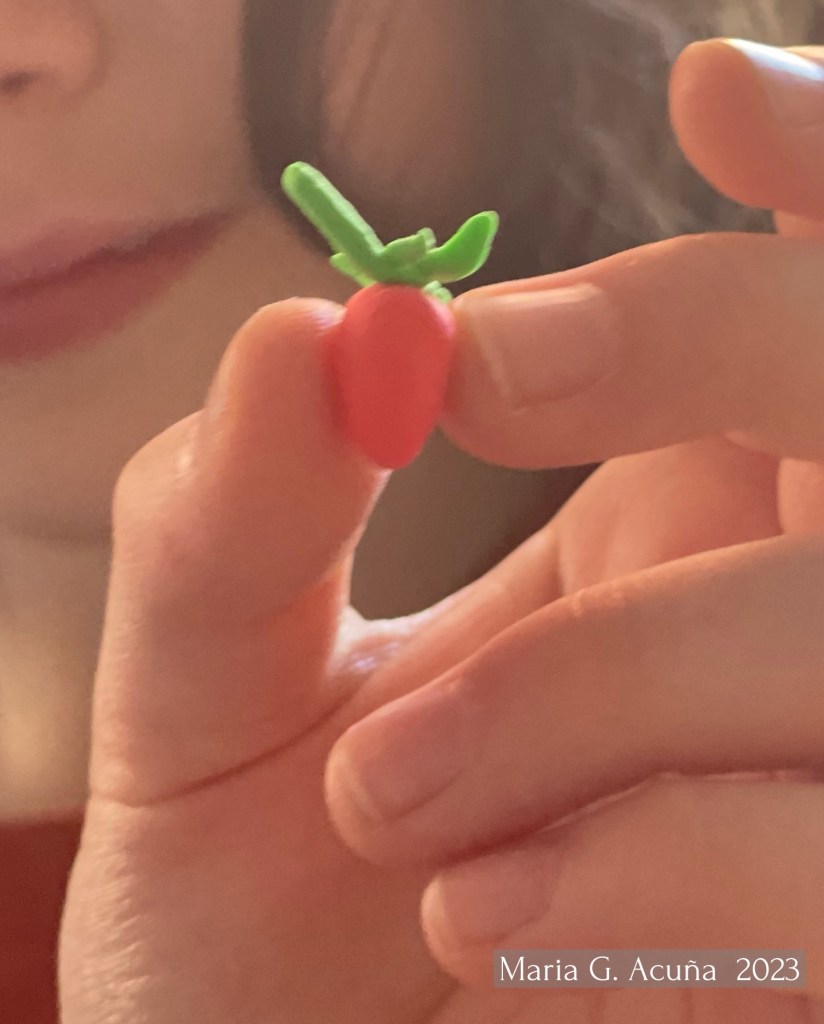
I talked to my students about Chivas and showed them the sort of items Colombian peasants would place on a Chiva. We practiced some of the food items that would go on the Chivas in Spanish, and other things and animals like chickens too. Then Students delighted making mini ‘everythings’ with air dry clay of different colors. (Of course we practiced the colors too! ^ ^)
In a joined class that lasted an hour and a half students created the racks and placed all their items in them. they also created backgrounds for them. We had so much fun!
Aren’t they wonderful! ^ ^ I think if you had no access to a kiln, you could make the Chivas out of cardboard.
Activity 3: Making a Chivas Mural.
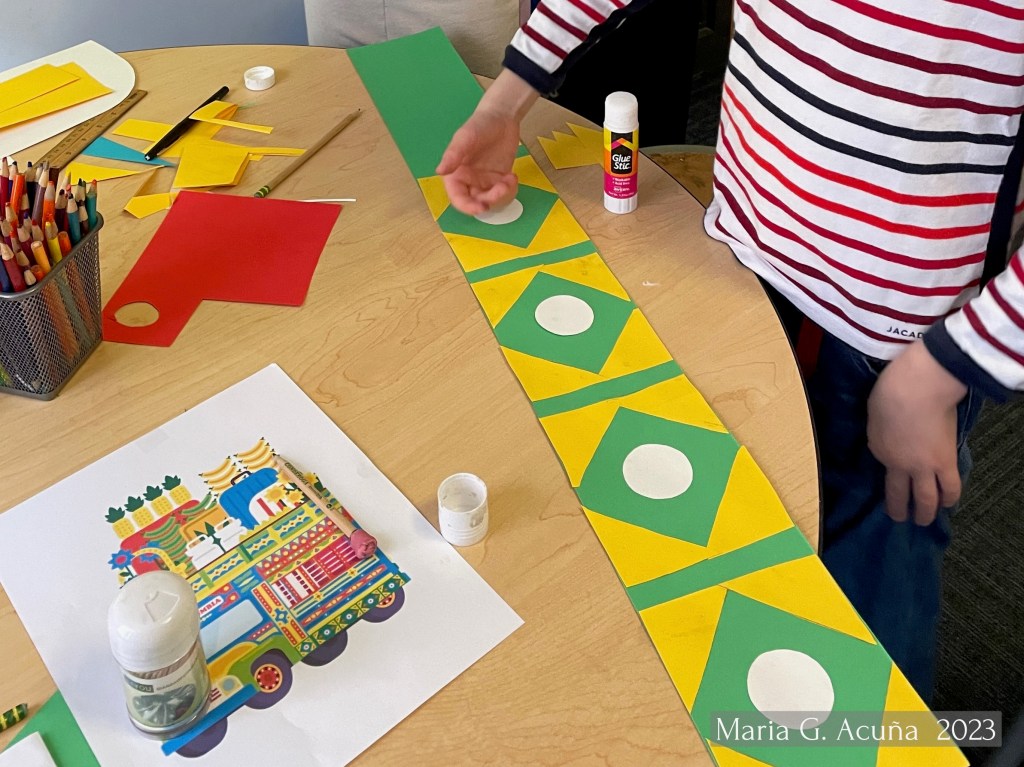
To decorate the Reception Area of the school, we call it the Family Center. My coworker (Lower Grade Spanish Teacher and Atalierista) and I worked on creating a giant Chiva. My Second, Third, Fourth Grade Students, a Sixth Grader and I worked on creating the body of the Chiva including wheels and name. My colleague worked with the preschool and kindergarten students creating 3D items to place on it.
This is the image we used as inspiration:
These are some photos of the process and the final product…
I hope this post inspires you to do a Chivas related activity! ¡Que se diviertan!
This series can be used with any student starting around fourth grade, or students that have done some reading in Spanish (words and sentences) and have a basic understanding of its phonics. It is also great for Heritage learners! (Students that already speak Spanish but do not have much practice reading and writing.)
This is the cover:
There are 7 texts or readings in Level 1 that are short, 6 to 12 sentences long. They cover basic vocabulary and topics taught in Spanish classes like: description with colors and adjectives, sentences in simple present using regular verbs, sentences using gustar, the verb “ir” (to go) and “tener”(to have) in third person, the weather and places in the neighborhood. As time goes on I will develop more series covering other topics.
Each reading has the reading in color and black and white:
I also created a Topic Guide of the grammatical content of the readings. It can help you find a text related to what you are covering in class and use it to complement any unit. By the way, SRC 1A 1 means: Spanish Reading Comprehension Level 1 Series A Reading 1.
There are 7 texts or readings in Level 2 that are short, 17 to 25 sentences long. They cover basic vocabulary and topics taught in Spanish classes like: the verb to go in present, as going to / future with other verbs, the past tense (pretérito), descriptions of animals with riddles, the present progressive (continuous) and vocabulary like colors, numbers, emotions, grades, objects and places in the school, etc. As time goes on I will develop more series covering other topics.
This is the cover:
Each reading has the reading in color, in B & W and a projection version:
It also comes with a projection version in color:
Here is the Topic Guide with the grammatical content of the readings:
I have been working on a various Spanish Reading Comprehension materials. I have just completed Level 1 , Series A. This is the first level of Reading Comprehension. It can be used with any student starting around fourth grade, or students that have done some reading in Spanish (words and sentences) and have a basic understanding of its phonics. It is also great for Heritage learners! (Students that already speak Spanish but do not have much practice reading and writing.)
This is the cover:
There are 7 texts or readings in Level 1 that are short, 6 to 12 sentences long. They cover basic vocabulary and topics taught in Spanish classes like: description with colors and adjectives, sentences in simple present using regular verbs, sentences using gustar, the verb “ir” (to go) and “tener”(to have) in third person, the weather and places in the neighborhood. As time goes on I will develop more series covering other topics.
Each reading has the reading in color, in B & W and a projection version:
I also created a Topic Guide of the grammatical content of the readings. It can help you find a text related to what you are covering in class and use it to complement any unit! I dreamed of this possibility! ^ ^
My idea is to create each reading and sell it as an individual product too. So far I have only created this Series A of 7 readings as a product. You can see and purchase it HERE. Come back soon for the individual product links.
I was looking for something to cook with my students when planning an unit about Spain. I had done non-alcoholic versions of Sangría in the past and gazpacho, and suddenly I thought of Churros. Churros are delicious flour dough sticks Spaniards love to eat at breakfast time dipped in a thick hot chocolate.
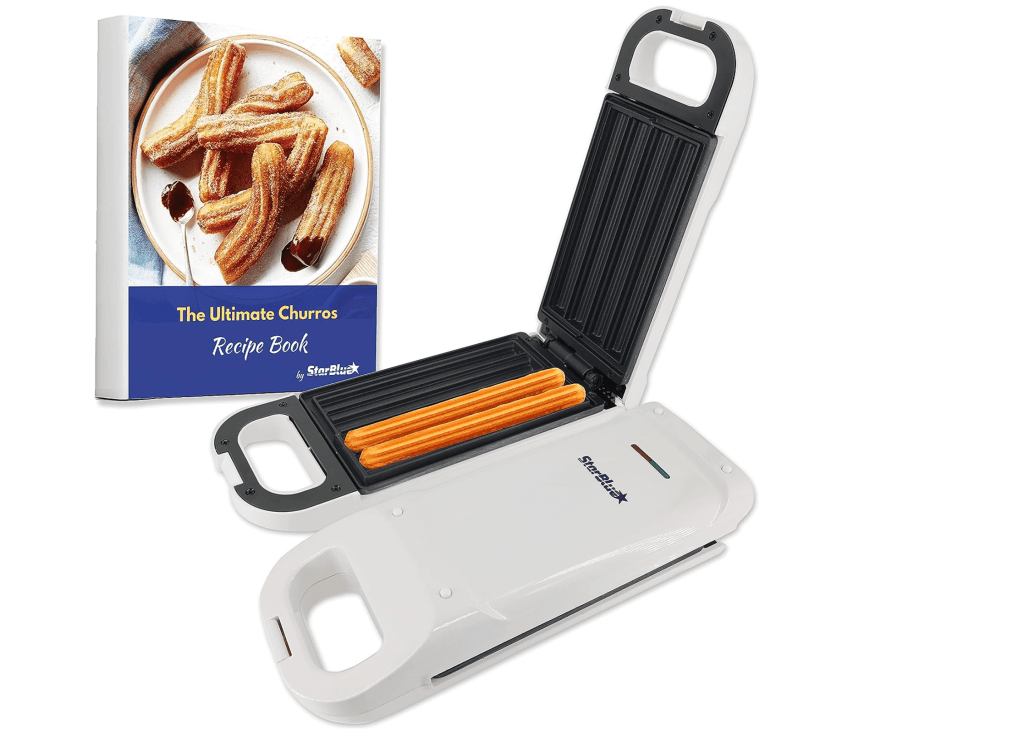
I thought about how much kids would love them and so I decided to type churro maker in the Amazon marketplace and I discovered a waffle like press to make them! It was perfect as I did not want to fry them! You can buy it at Amazon* rightHERE. This is it:
About the Dough
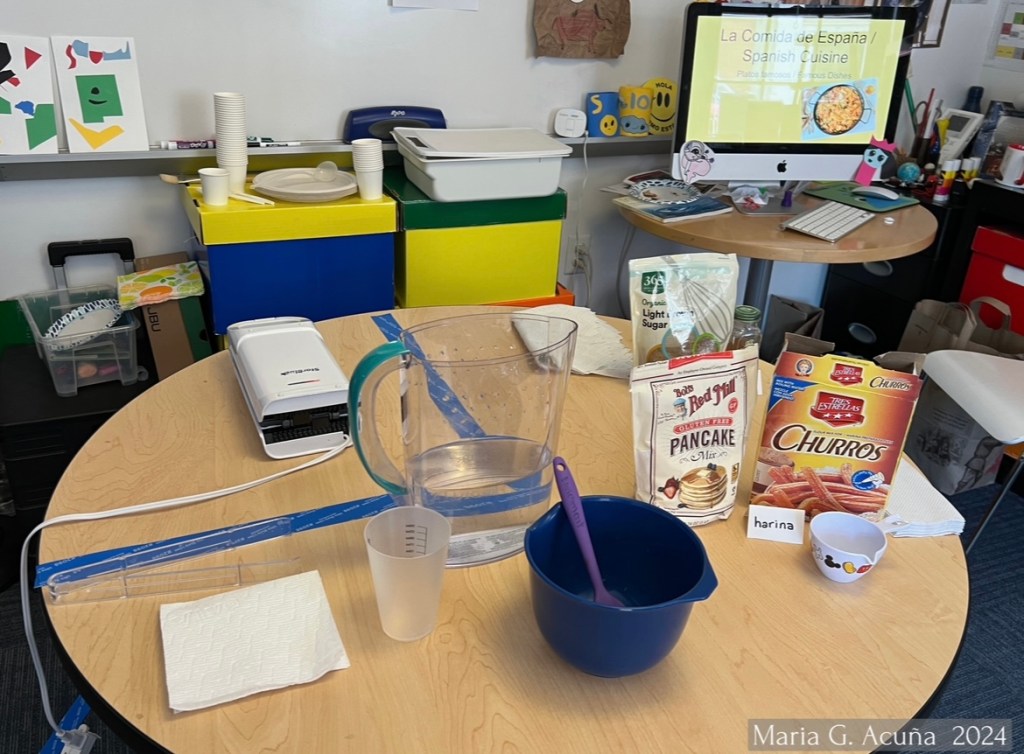
This was my set up. I always mark the area where students can’t go with blue painters tape…even the floor.
Did you notice on my computer the Slides Presentation about Spanish Cuisine? HERE it is. ^ ^ I only used the portion about churros… as you really need the time to make the churros!
To make the churros themselves I found a churro flour mix. You can buy it at Amazon* right HERE.
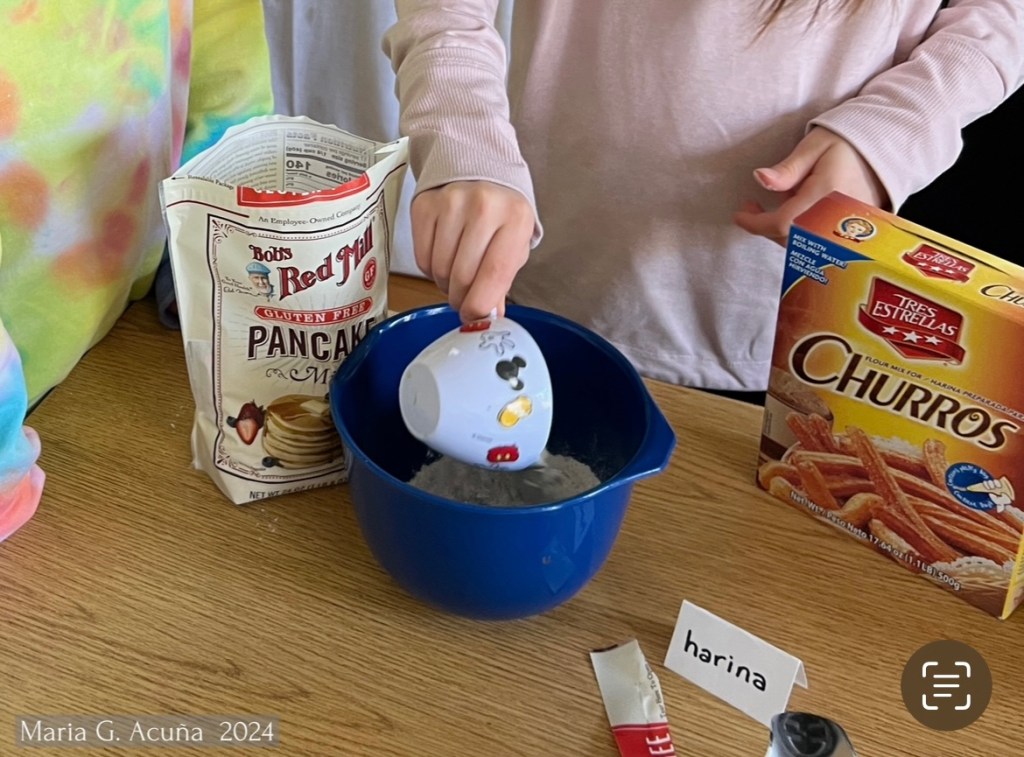
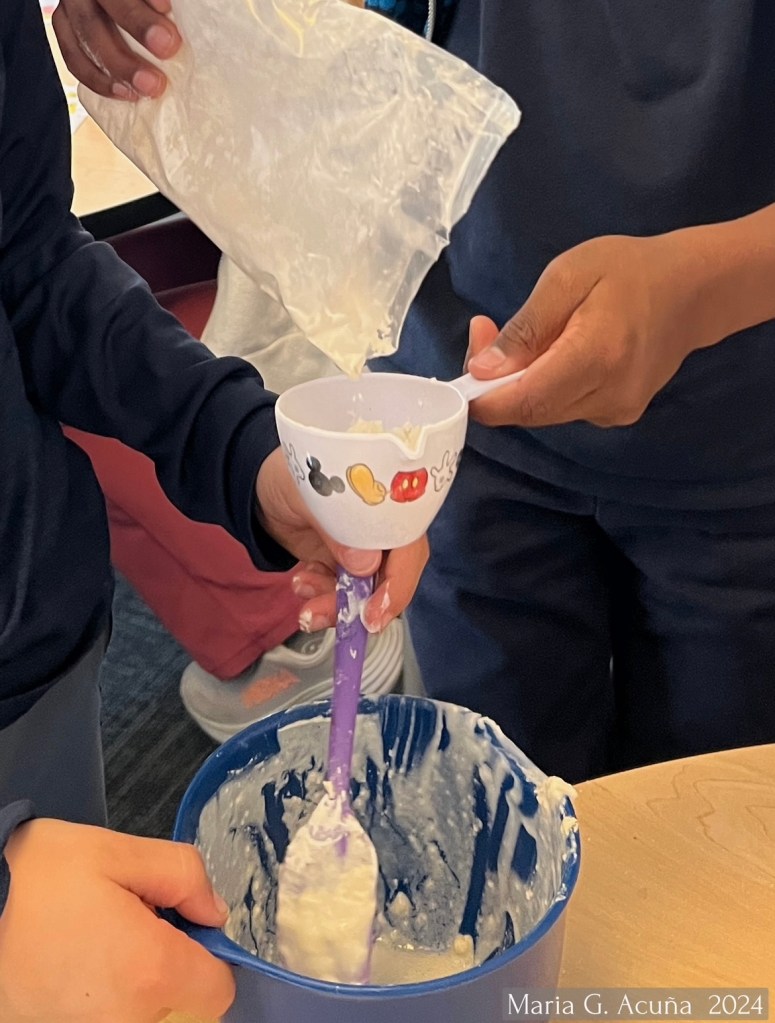
Even though it says add boiling water, I just added natural temperature water and it worked perfectly! My students enjoyed adding the ingredients and mixing without me worrying about them getting potentially burned! One thing I discovered as I made them is that you need a pancake / waffle consistency on the thick side. Then using a laddle just pour it on the churro maker until you fill them up on the bottom 1/2 of the press. Then you let them. cook for about 1 1/2 minutes and spin the churro maker around (just like a waffle maker) and then cook it for an additional 2 1/2 minutes and they are done!
GLUTEN FREE option! For my students who had glutten allergy I bought a pancake /wafffle mix that was gluten free, it worked really well! They have a slightly difference in texture but it is still pretty close and when you dip them in hot chocolate you can barely tell the difference!
ABOUT NUTS ALLERGIES: This flour is made in a facility that processes nuts, so if your student who is allergic to nuts is not severely allergic this will work (I had one of these students.) I would check with the parent if you are not sure about how severe their allergy is just in case!
By the way when the churros come out they are all stuck to each other, so use a child friendly knife to have your students cut them into separate sticks.
Another part of the churros is to add sugar and cinnamon on them. Well, this is where I ran into a bit of a problem as it would not stick to the churros. One solution it to put the sugar and cinnamon in a plastic ziplock bag and as they are hot the steam will make the sticks wet and then eventually the sugar and cinnamon will stick to them. I also tried using a brush and I had students brush a bit of water to the sticks after we cut them (separating them) and then rolled them in the sugar / cinnamon mix.
About the Chocolate Dip
Yes! a churro would definitely not be the same without it! So one option is to buy the Valor brand chocolate which is highly used in Spain. It is in Amazon* rightHERE and looks like this:
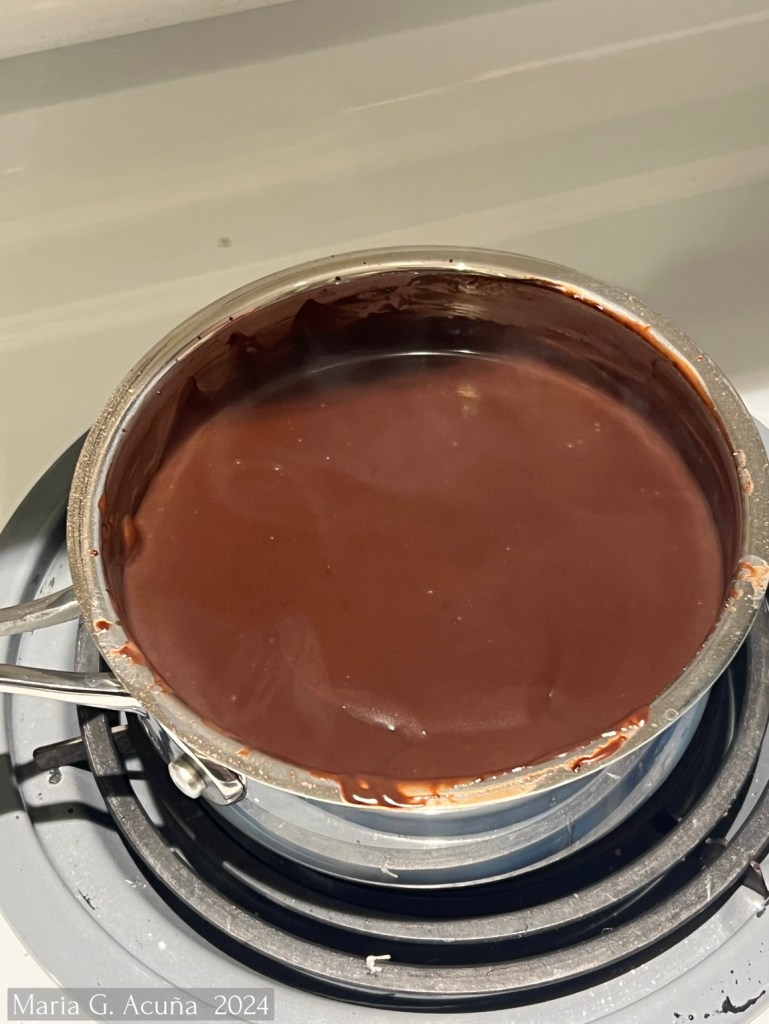
You will need whole milk too. If you have a LACTOSE INTOLERANT student just use Lactose Free milk. I made the chocolate ahead of time and let it cool down at almost a pudding state so students would not get burned. They absolutely loved it. Another way you can make this thick chocolate is with milk, chocolate and corn starch (which is great as it keeps it all gluten free.)
ScreenshotScreenshot
About Amounts
How much do you need? Well after doing it with various of my classes, I would say you need a cup and half of the dough mix for every 4 churros (4 students). The mix in the box above gave me about 20 churros. Chocolate wise I used the bag above for about 20 students. I used it with about 3/4 of a gallon of milk. Sugar about a cup and Cinnamon 2 tablespoons for covering the 20 churros.
ScreenshotScreenshot
Activity for when kids are waiting for their turn…
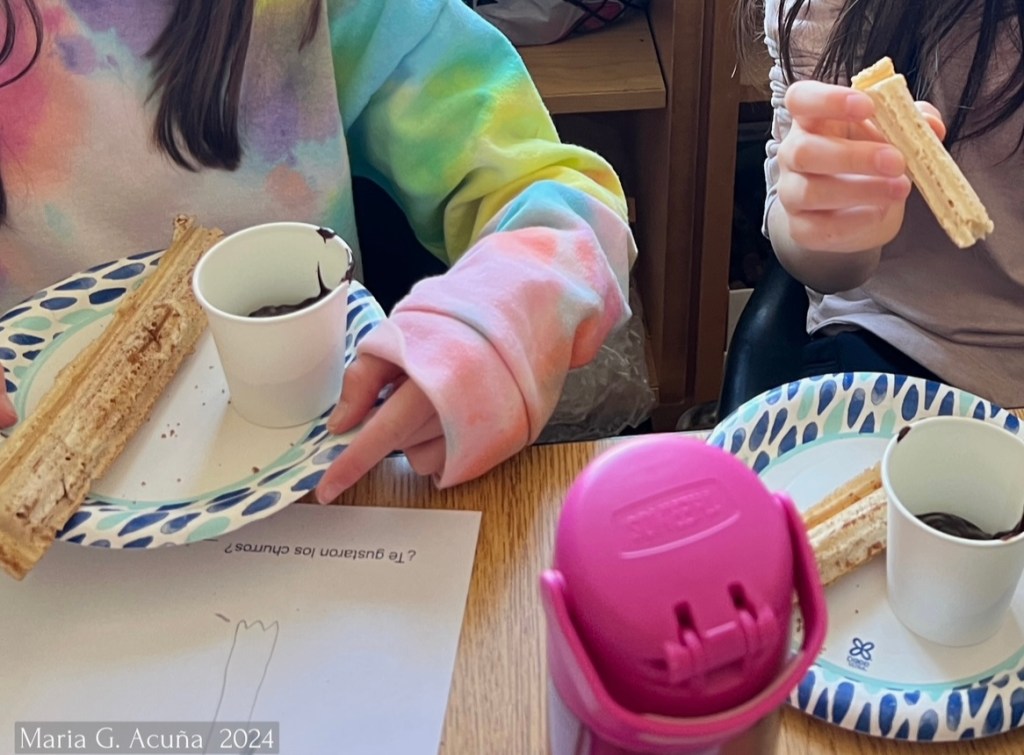
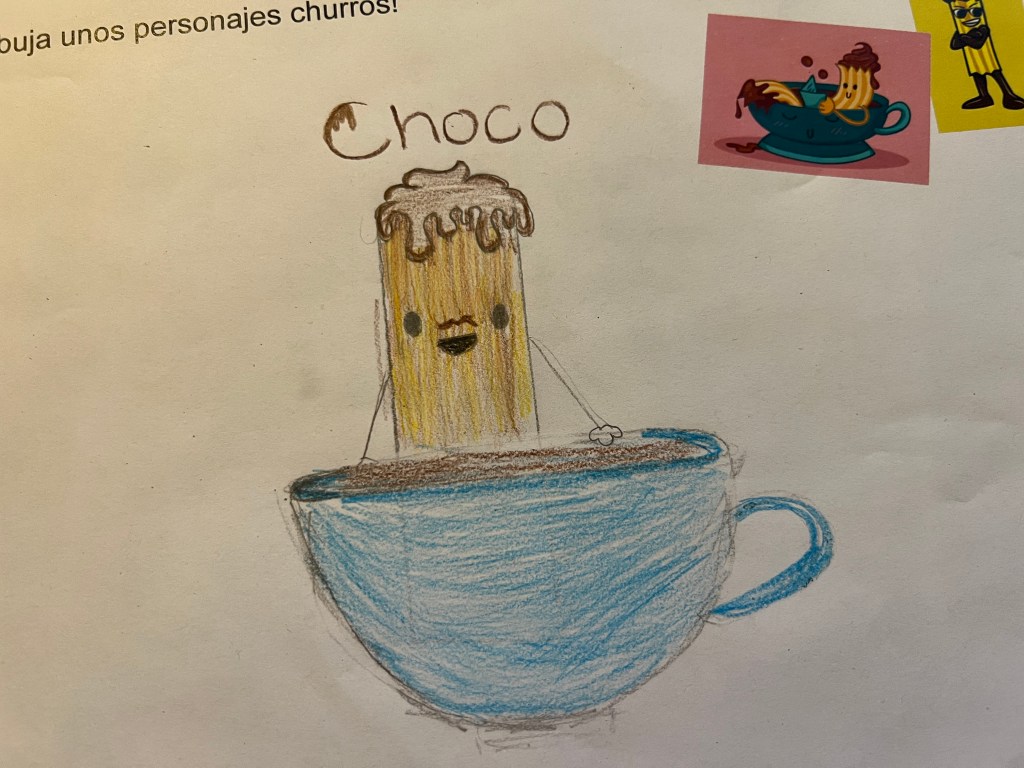
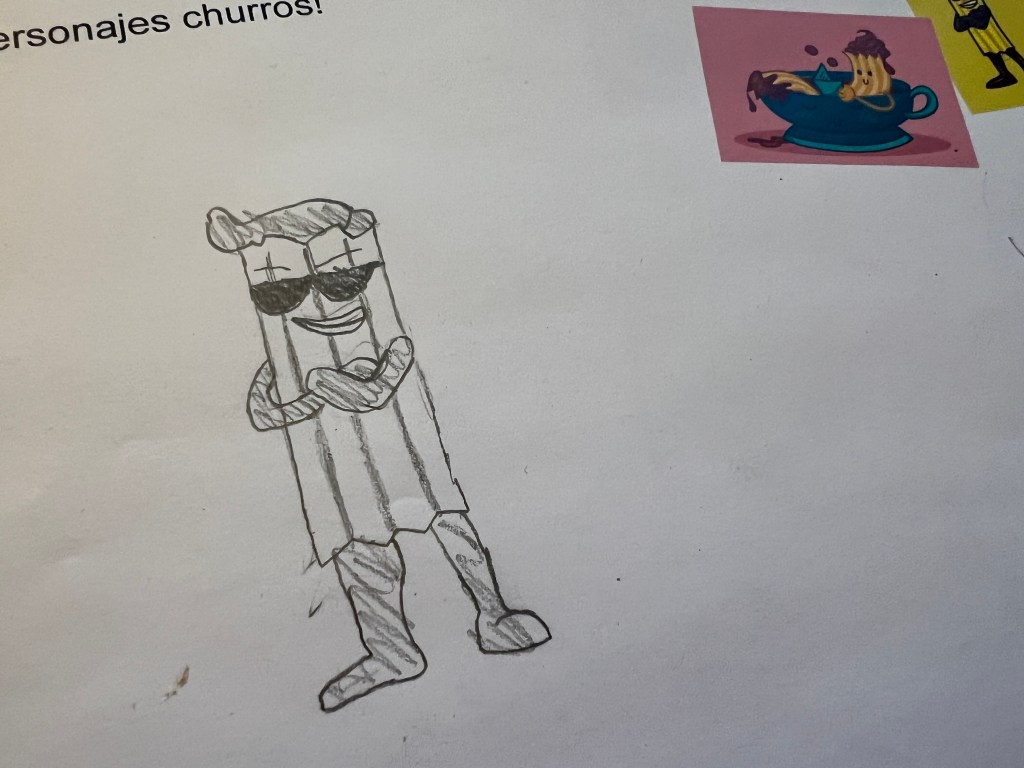
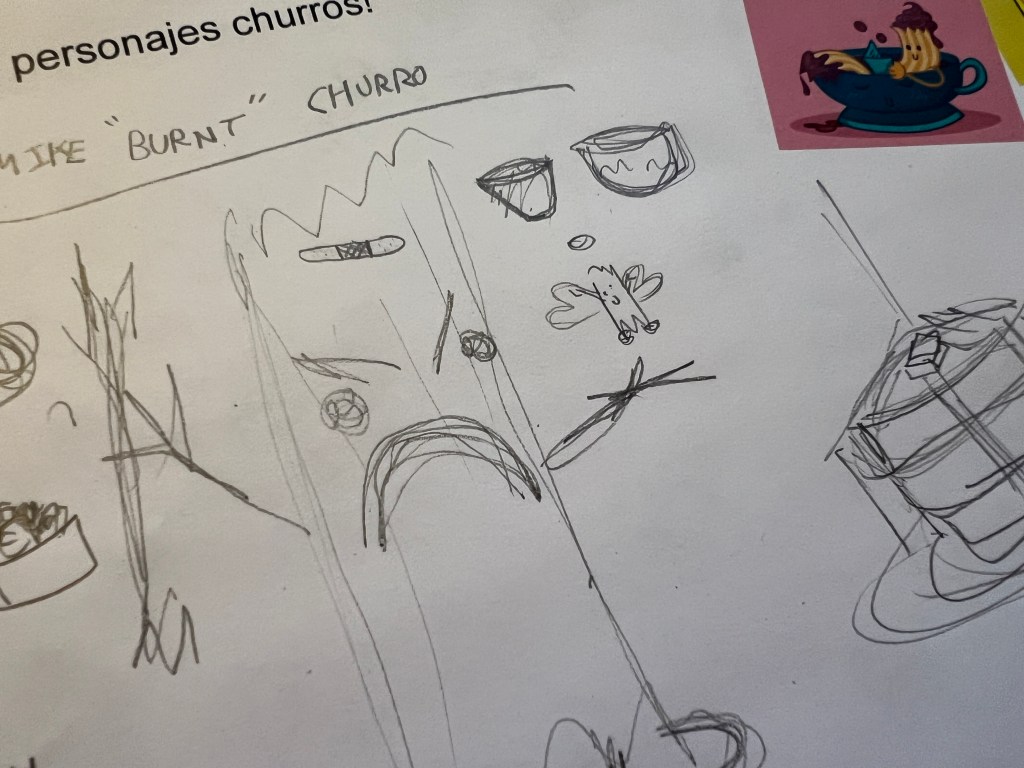
As only 4 churros come at at the time, you will have students waiting … so what to do with them? I created a worksheet for them to draw churro animated characters. They loved it! The worksheet in included in the Slides Presentation above, but here it is also in jpg format:
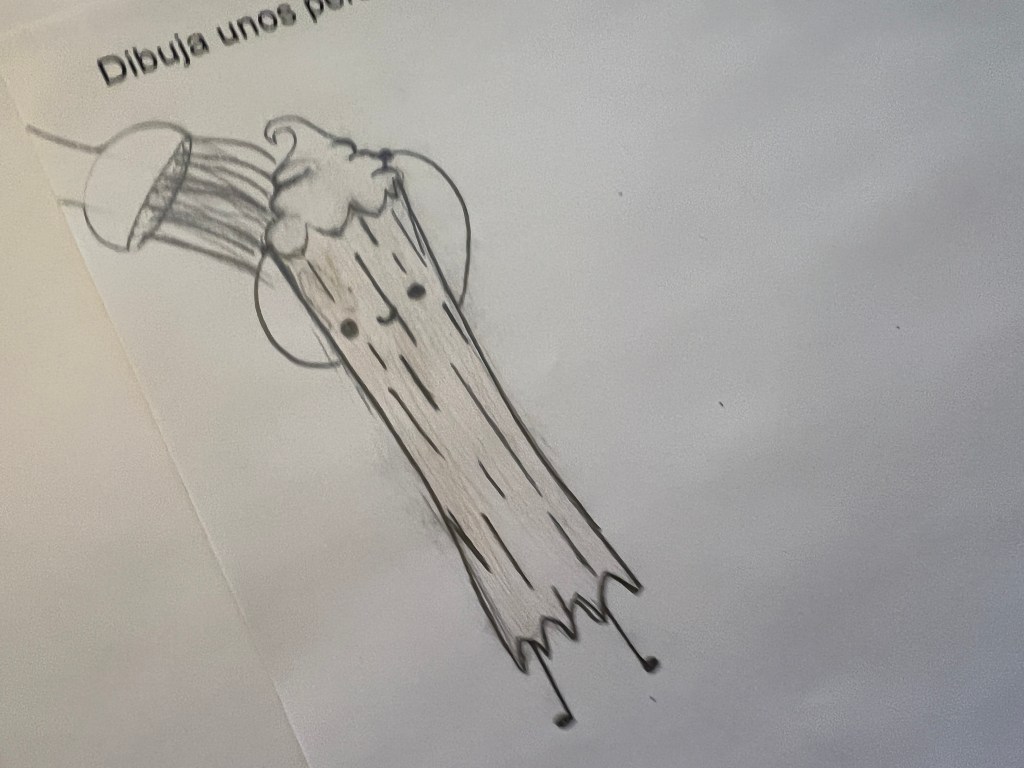
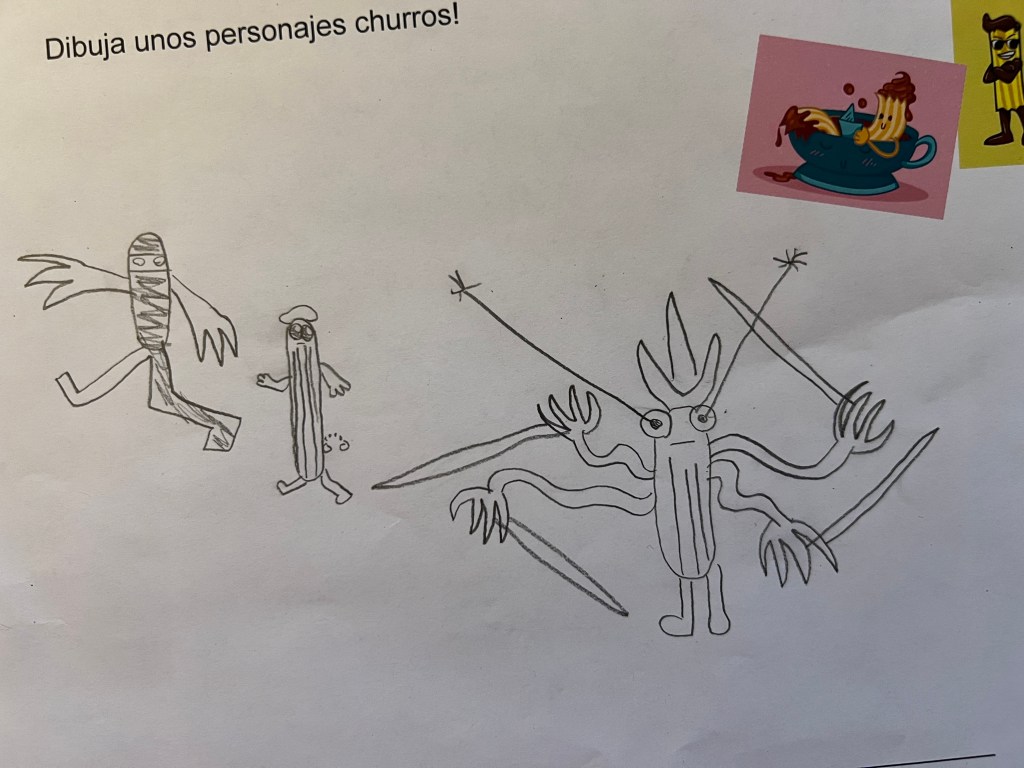
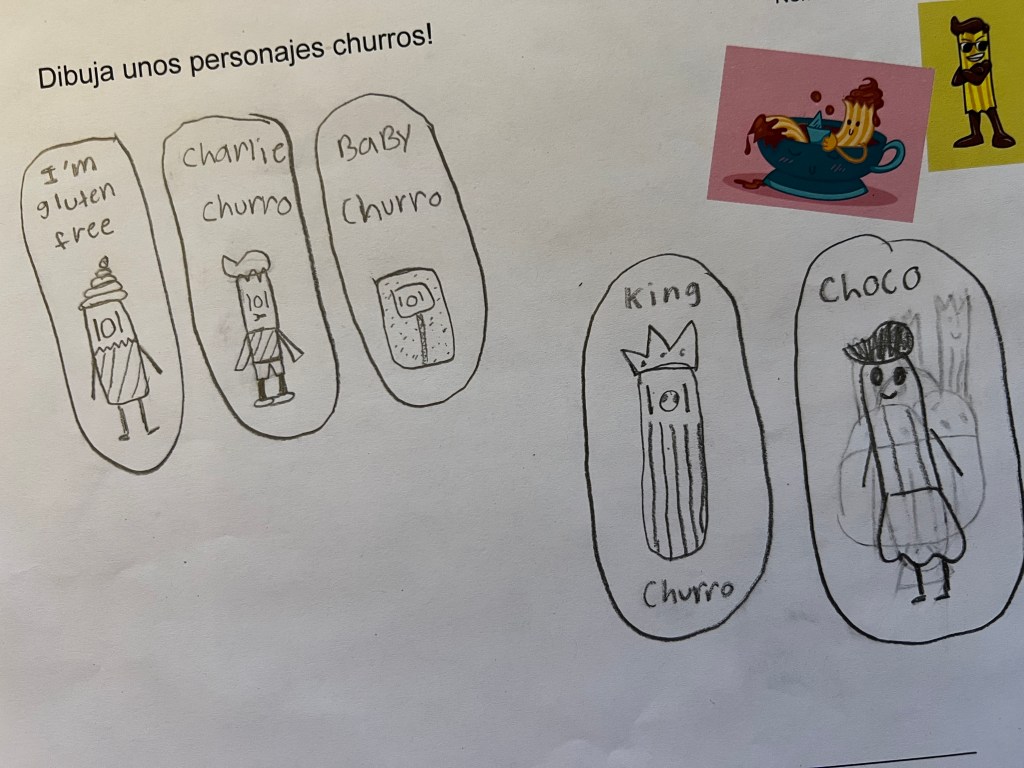
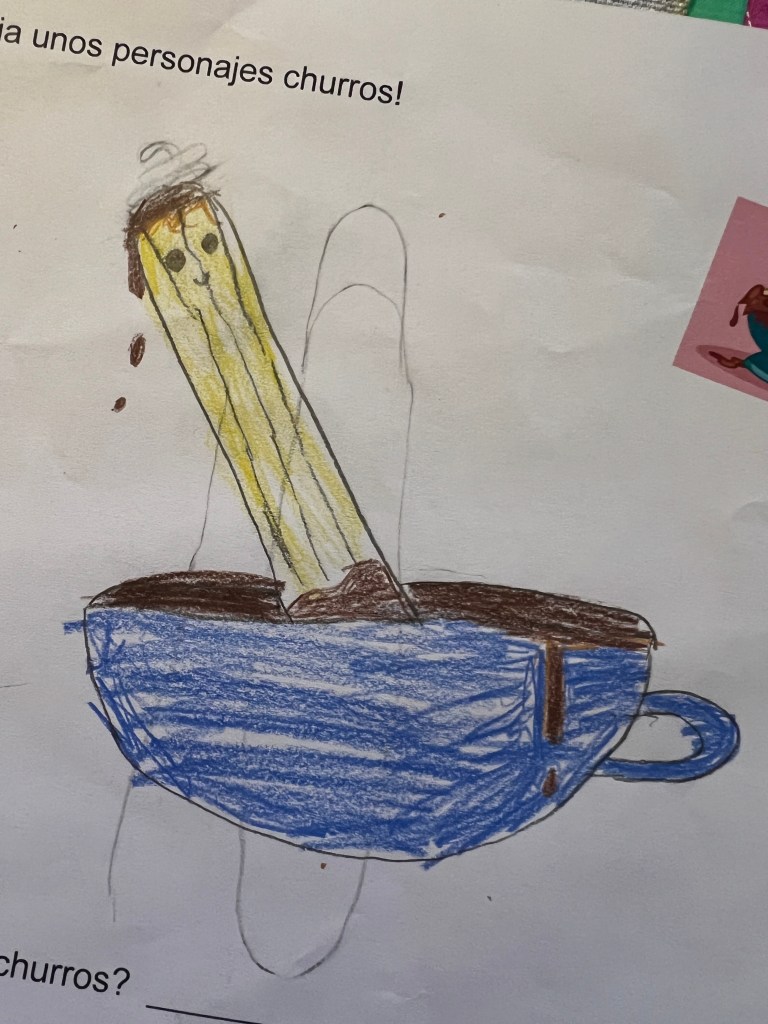
Here are some of the incredible Churro characters my students created:
I hope this inspires you to try it. Your students will absolutely delight in them… one of my classes even said. This is the best class of all your classes ever Ms. Acuna! ^ ^
*www.alphabetspace.com is a participant in the Amazon Services LLC Associates Program, an affiliate advertising program designed to provide a way for websites to earn advertising revenues by advertising and linking to Amazon.com.




























 Spanish Learning Resources