This version has more photos and videos and it is lighter on the text side. It can also be used with elementary students in general. I have used it with students up to 6th grade. It is broken up into three parts… for three classes of up to 45 minutes each.
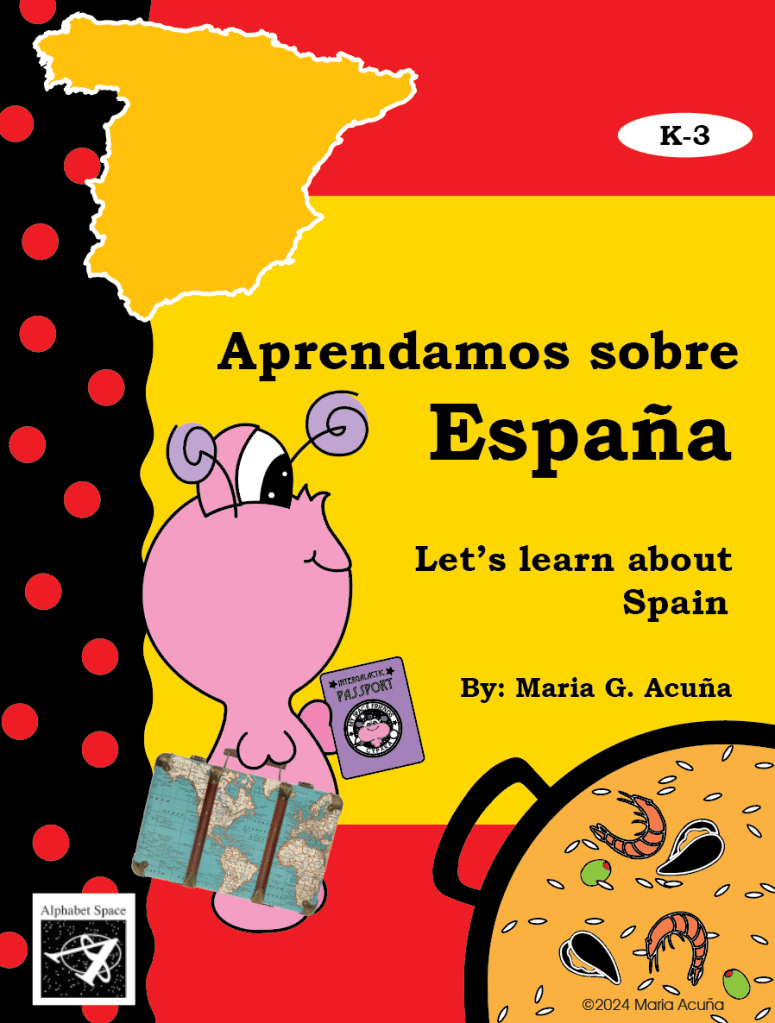
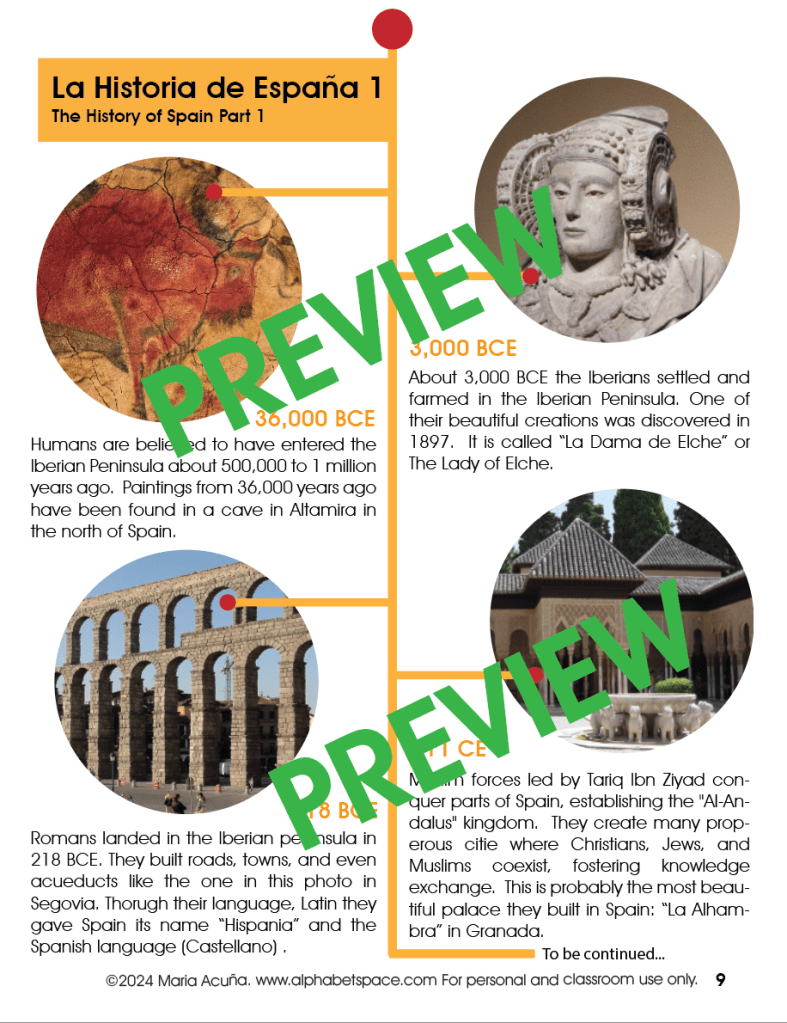
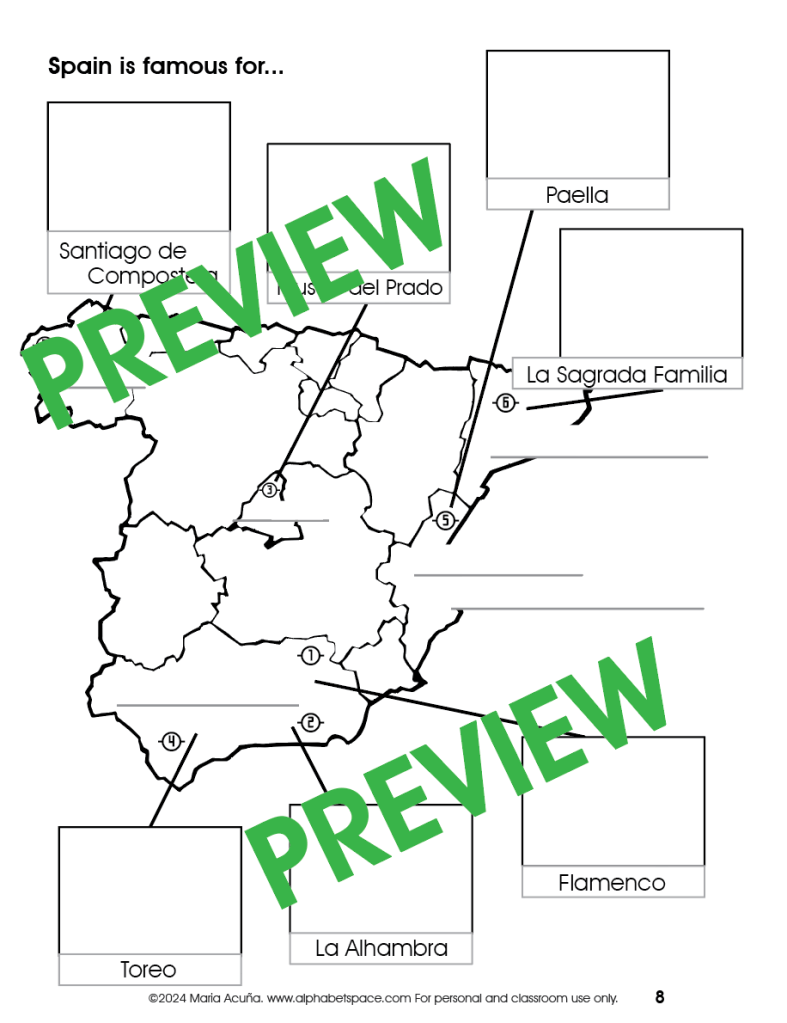
Before we get into it here is a little commercial… this is a new book I created to learn about Spain! It is especially for children K-3rd grade and covers location, geography, history in 3 parts (matching the text in this page), political division into communities, culture including festivals, visual arts and cuisine. It comes in two formats and with lesson plans. It also has Slides presentations links full of photos and videos to show your student/students. Here is a preview in PDF:


FIND THE BOOK HERE!
And now here is…
Part 1
Pre-Historic Spain / España Prehistórica. 36,000 BCE
Spain has been referred to as a bridge between continents because of its location between Europe and Africa. As a result of this location, Spain has been influenced by many cultures coming from Europe and Africa.
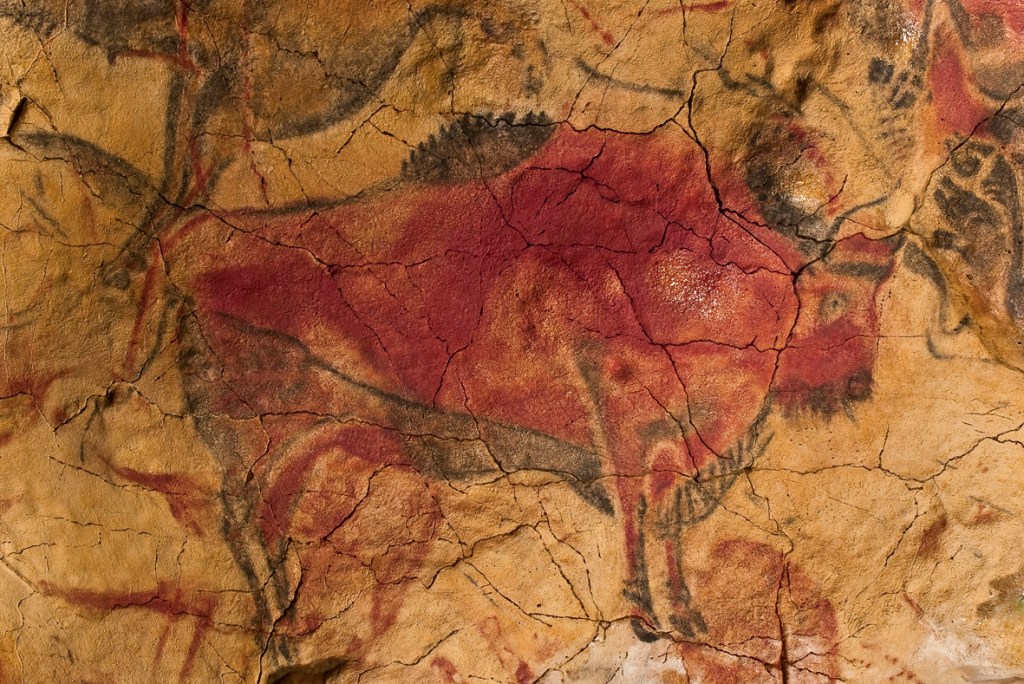
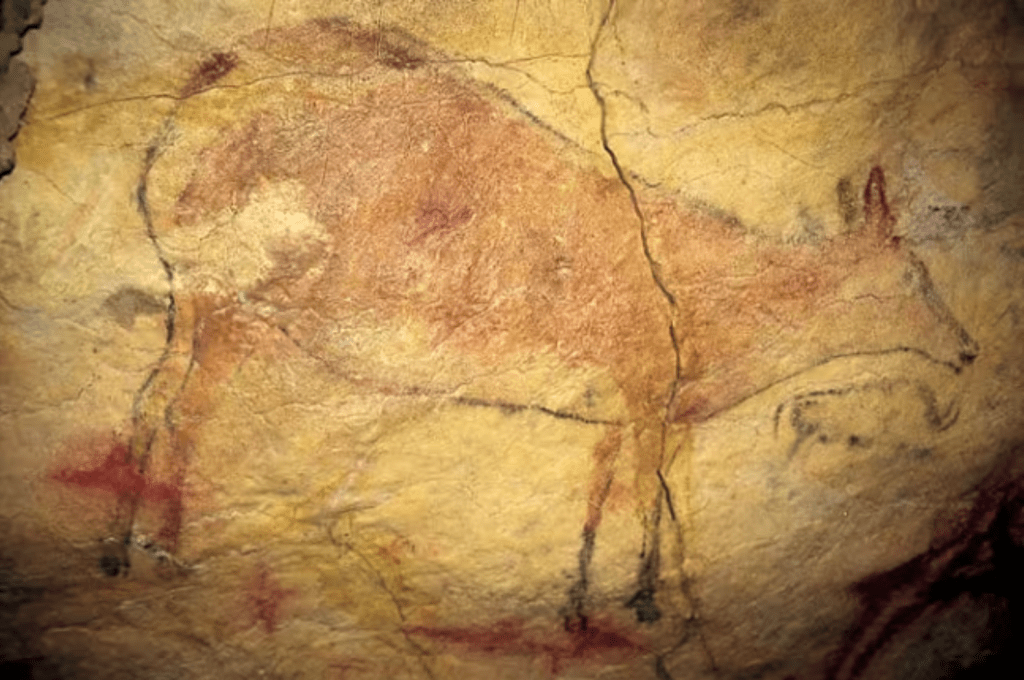
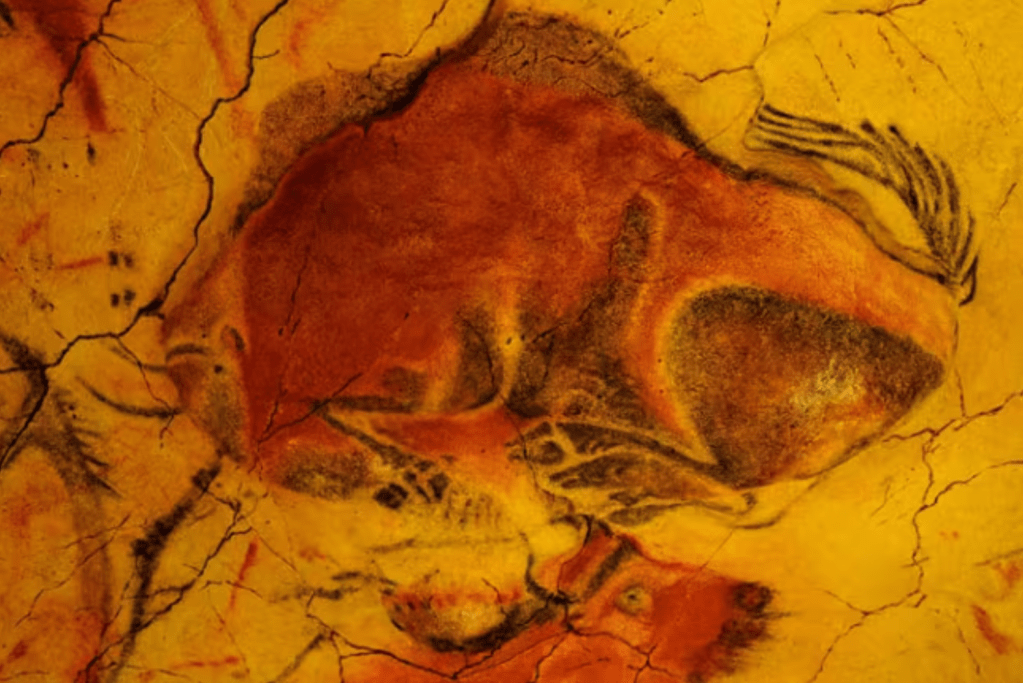
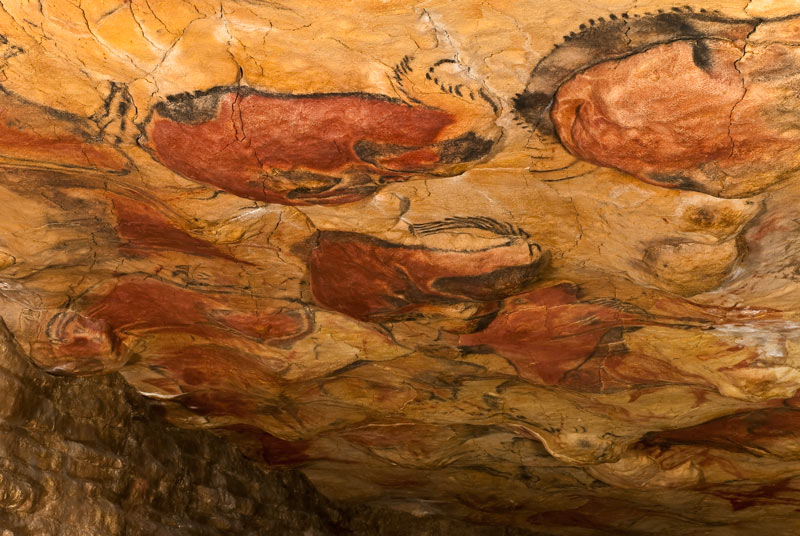
Humans are believed to have entered Spain about 500.000 to one million years ago. These prehistoric men were primarily hunters and led a nomad lifestyle moving from place to place. They took refuge in caves and in some of their walls paintings have been found. The most famous site in Spain was discovered in the 1800’s by an eight year old girl in Altamira, a small town in the north of Spain.
The opening of the cave was found by a local, Modesto Cubillas, who notified Marcelino Sanz de Sautuola, its owner who was fond of paleontology. He toured the place identifying some abstract signs, but it was his daughter, María Sanz de Sautuola, who, entering the cave, discovered one of the side rooms full of paintings, and ran to notify her father of the discovery.
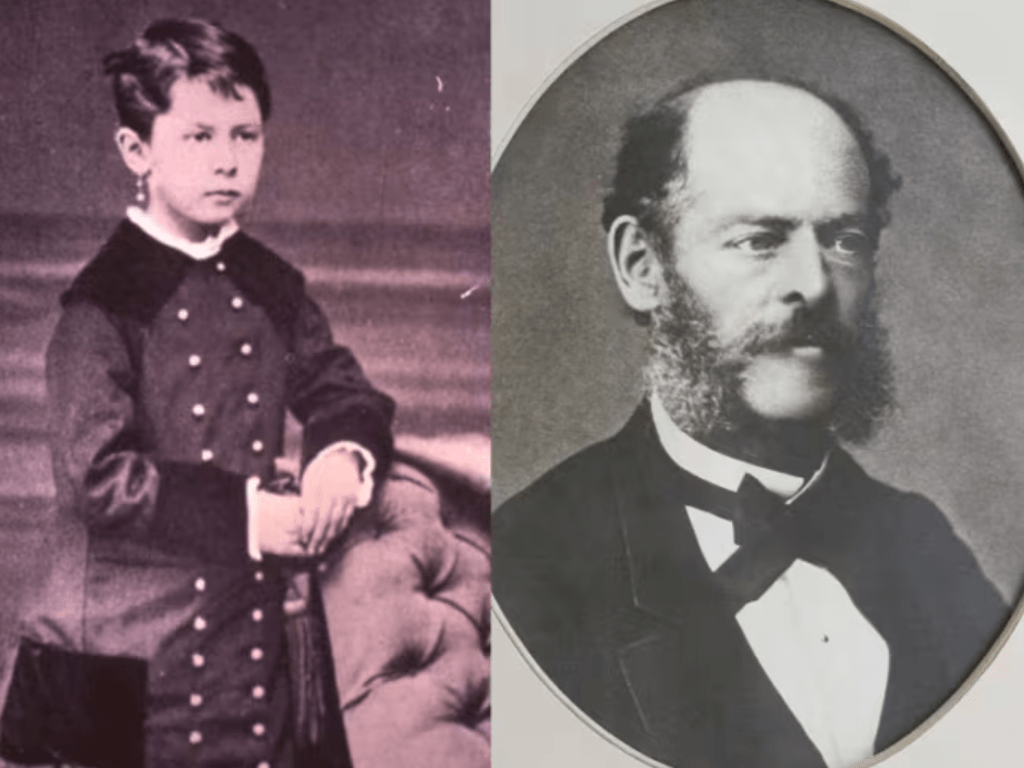
Maria (left) and her father, Marcelino Sanz de Sautuola.
Ancient Spain / España Antigua
The Iberians (Los Íberos). 3000 B.C.E.
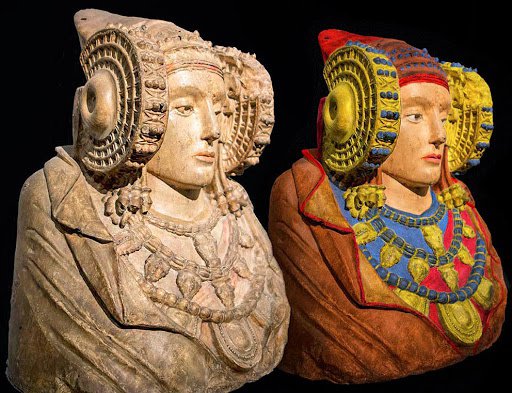
The Iberians named after the river Ibrus (Ebro) came from Northern Africa and settled in the southeast of Spain. They farmed and domesticated cattle. Their societies became more complex. They tended to live in diverse isolated communities. One of their most famous works discovered in 1897 in Valencia is a beautiful sculpture called “The lady of Elche” (Dama de Elche).

The bust had colors originally and represents a woman wearing an elaborate headdress and large wheel-like coils (known as rodetes) on each side of the face. The opening in the rear of the sculpture indicates it may have been used as a funerary urn. This is what she may have looked like in color:
These are other famous Iberian creations:
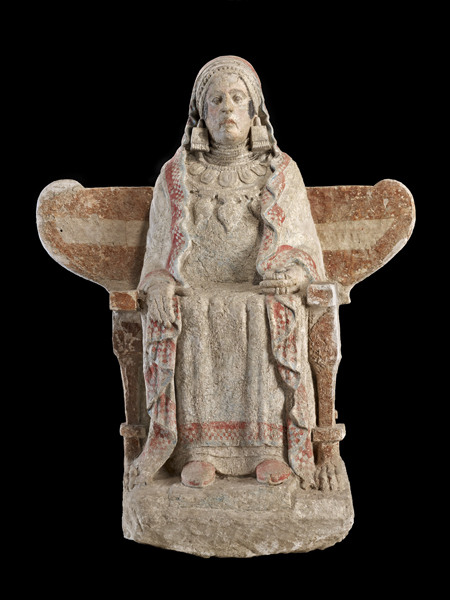
La Dama de Baza, found in Granada, Andalucia, Spain.
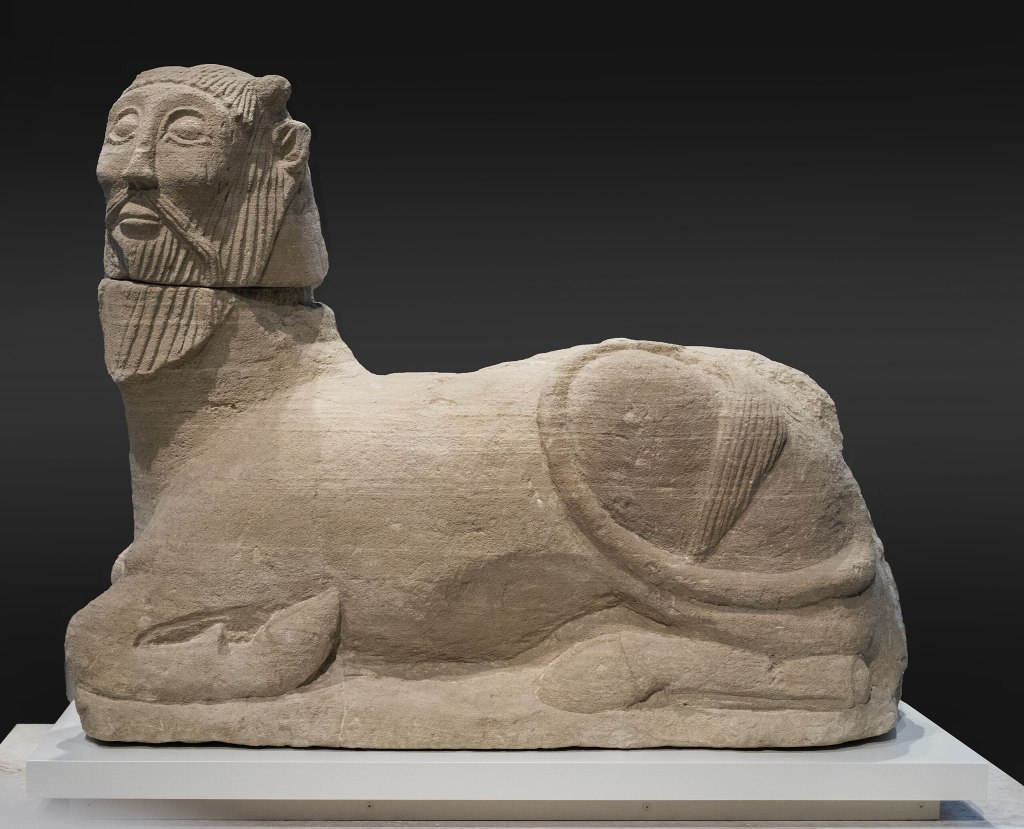
Bicha de Balazote, from Castilla – La Mancha.
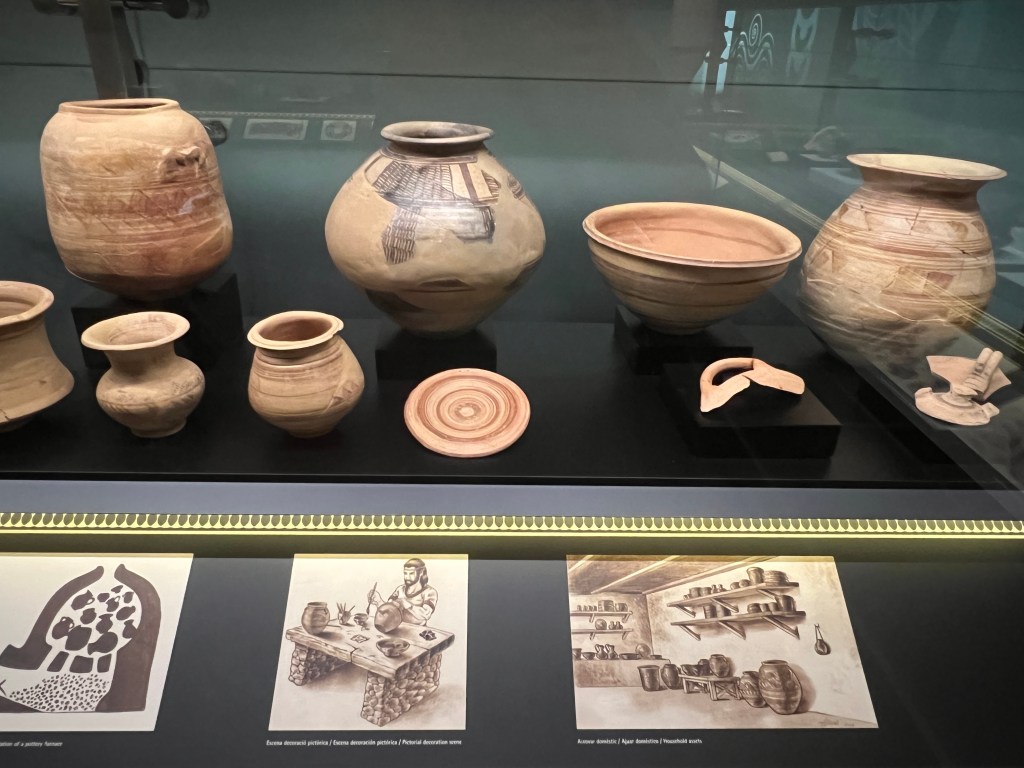
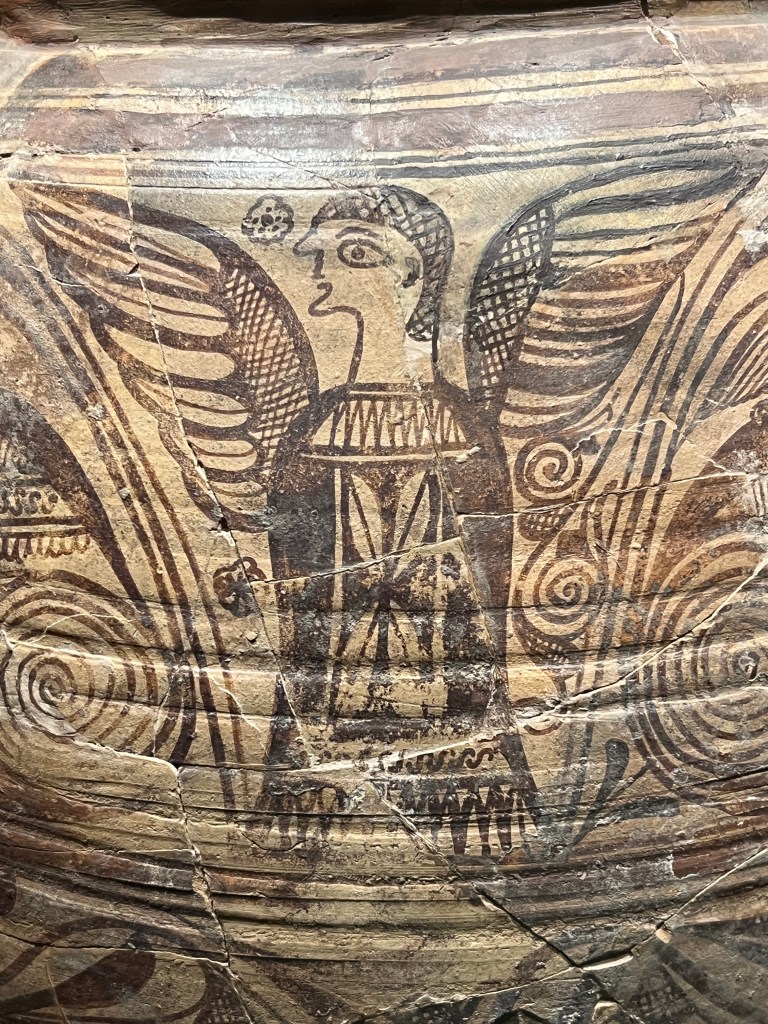
Below is a short gallery of photos of other Iberian findings at the Archeological Museum of Elche. Cr. Maria G. Acuña 2023 (yes me! ^ ^)

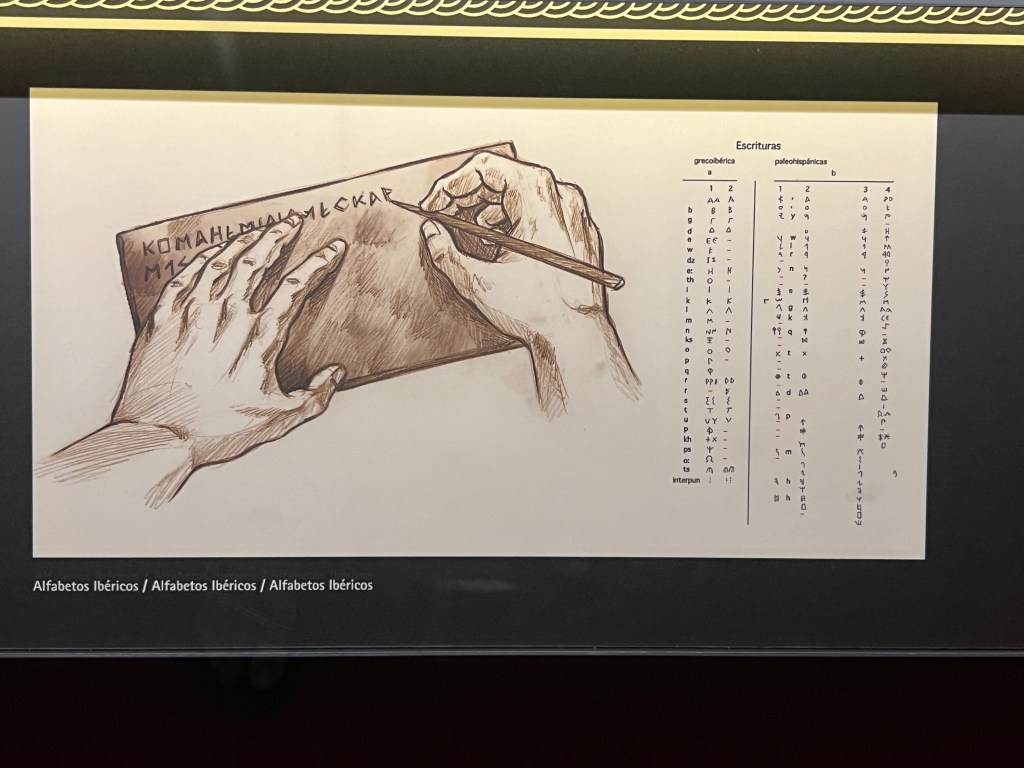
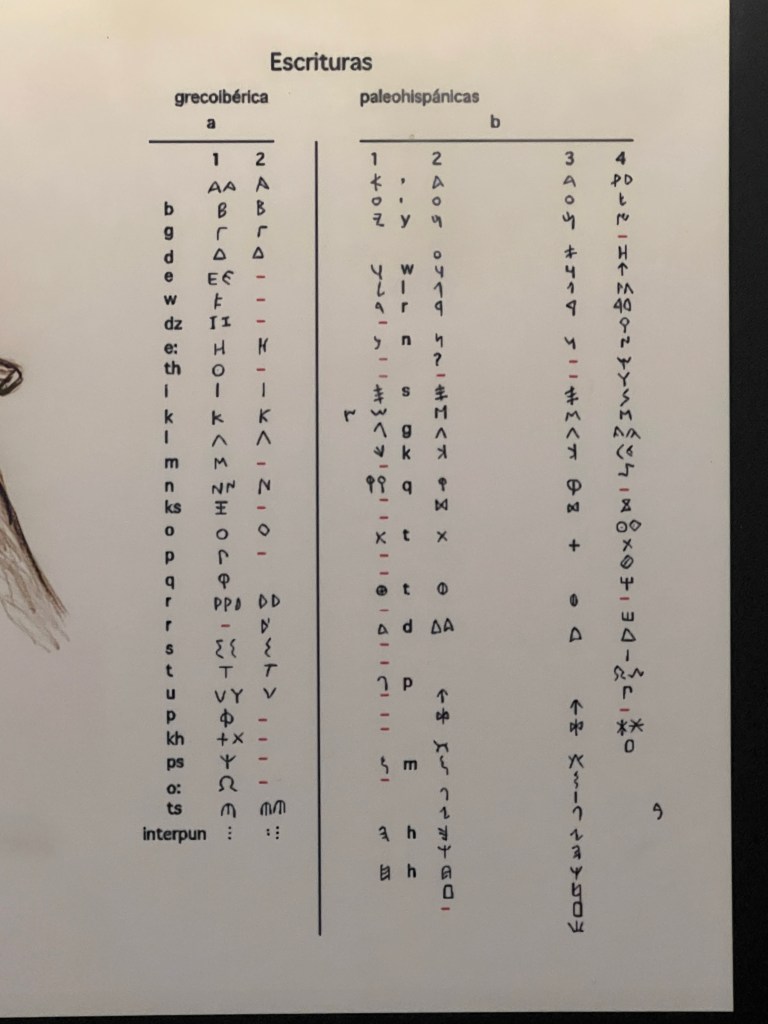

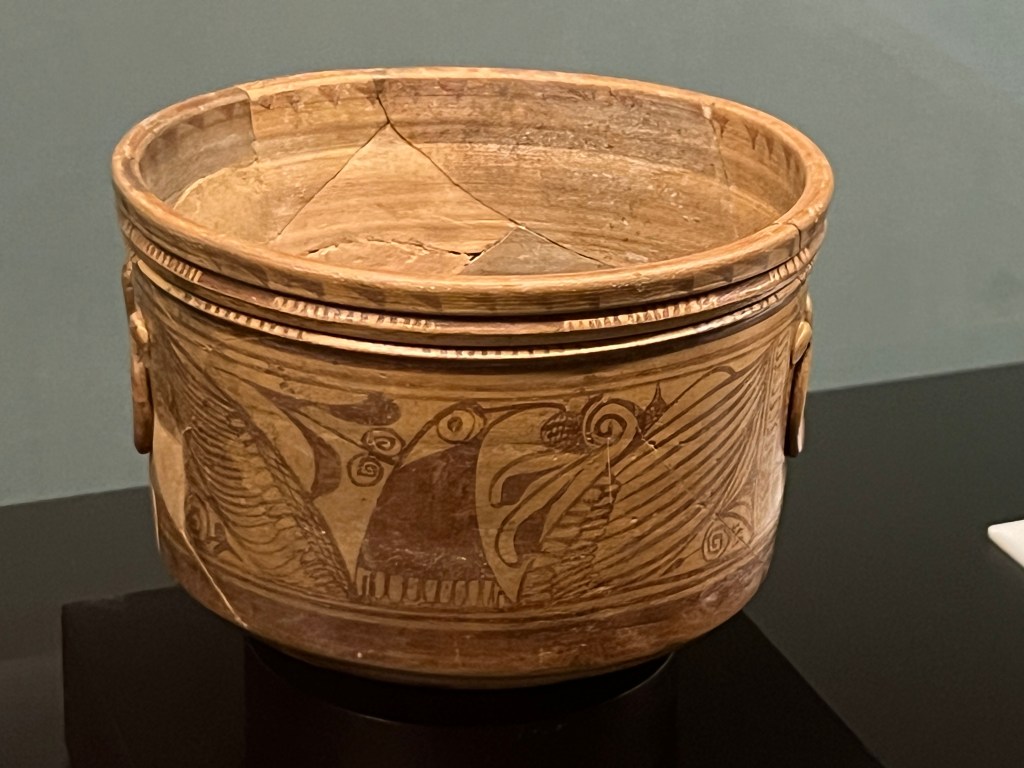
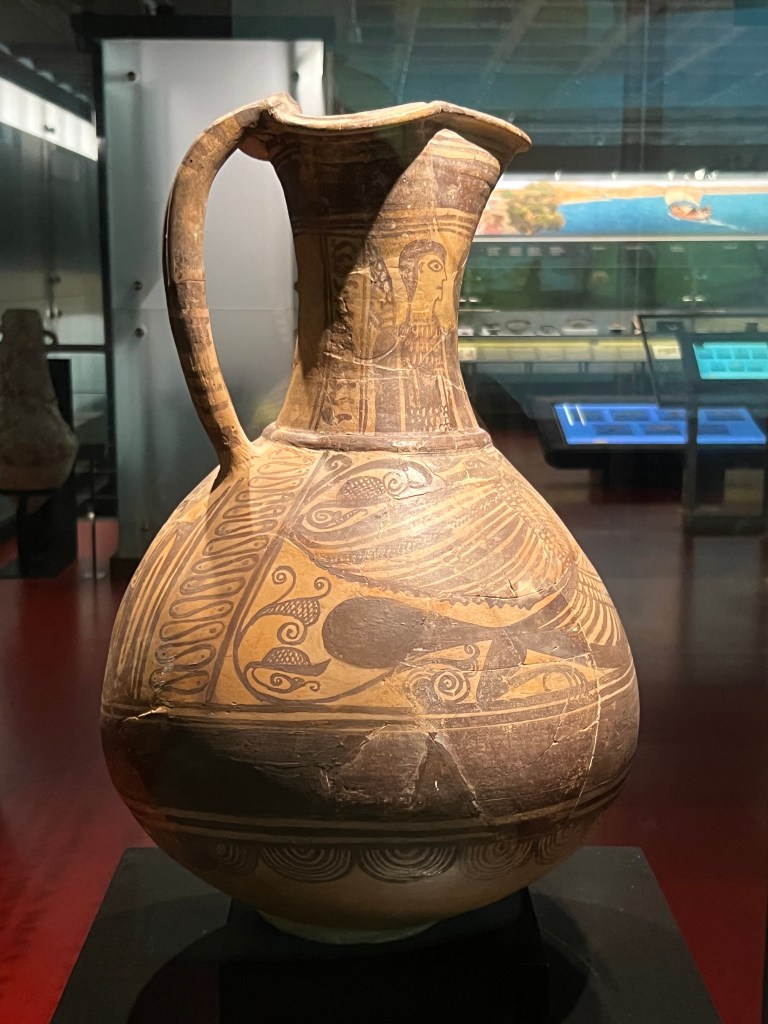
Here is a video about the Iberians. I recommend going form 1:39 to 5:08 where the video highlights their way of living. Then it gets into their warfare and loss.
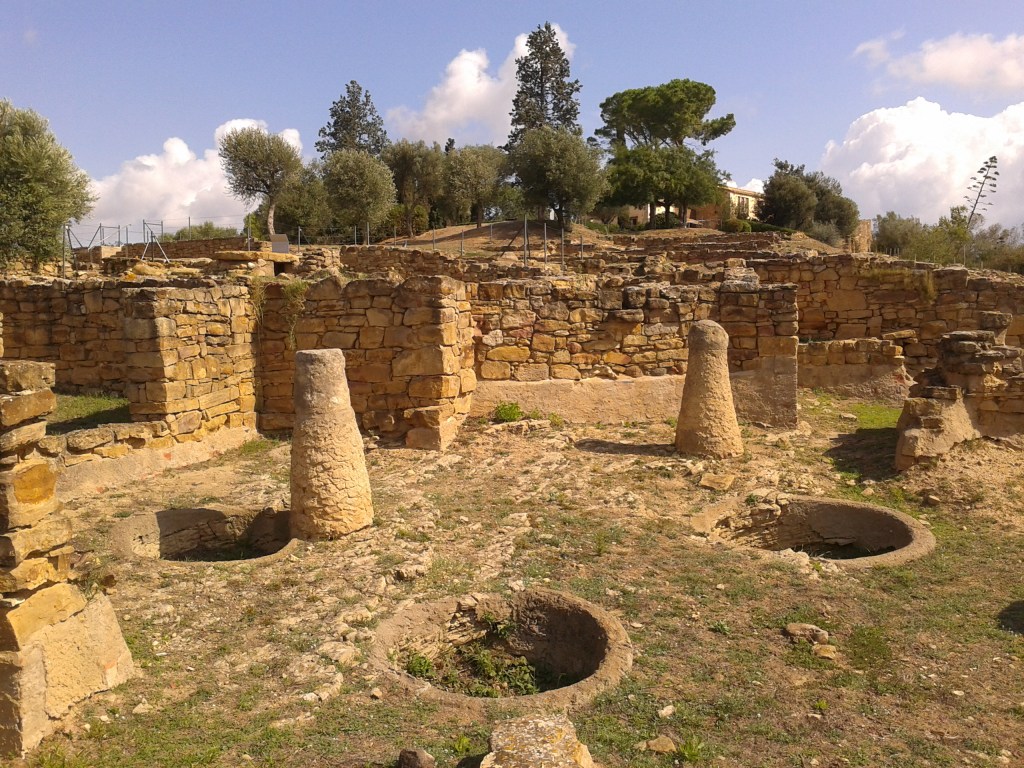
THe following are the remains and a digital reconstruction of the Iberian village of Ullastret in Catalonia, Spain.

The Romans (Los Romanos) 218 B.C.E.
The Romans entered Spain around 218 B.C.E. and battled against the Iberians, Lusitanians, Gallaecians and Celts. Finally Emperor Augustus completed the conquest by 19 B.C.E. after the Cantabrian wars. Romans are believed to have given the name of Hispania to the region (Hispaniae). For 500 years, Hispania became part of the Roman Empire bound by its laws, language and culture. Their language Latin provided the base for many new languages including Spanish.
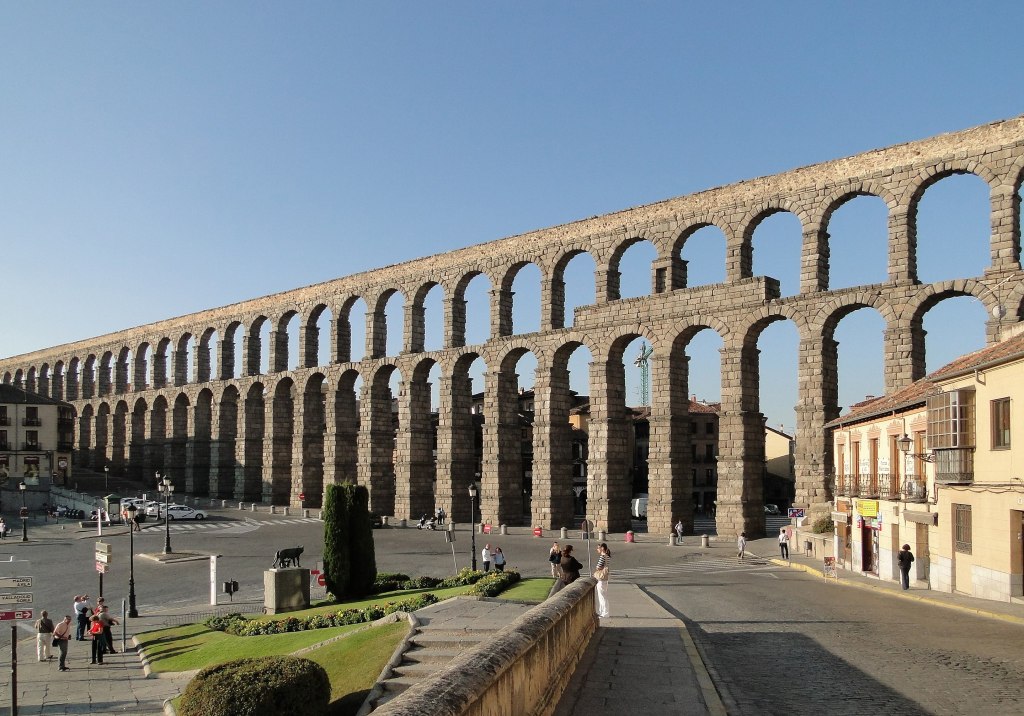
The Romans who were accomplished architects and engineers, organized Spain by building roads, bridges and aqueducts. The most famous aqueduct in Spain is in Segovia, it has 167 arches and runs for 9299 miles (14, 965 km). It is believed to have been built by Emperor Trajan’s workers and slaves, who used about 200,400 granite blocks.
Muslim Spain (España Musulmana) 711 C. E.
The Muslims or Moors (Los Moros) came into Spain under the Berber leader Taquif Ibn-Ziyad and displaced the Visigoths and established their kingdom: “Al-Andalus” under the rule of the Caliphs of Damascus in 711. During this time there was an unusual tolerance of religious practices where Christians and Jews were allowed to worship to their doctrines in their separate areas under Muslim rule.
During the 10th century, the Caliphate of Cordoba, founded by Abd-ar-Rahman III in 929 becomes very prosperous and is considered by many the most enlightened city in the world at this time. During the reign Al-Hakam II in 961, Christians, Jews and Muslims translated Greek texts into Latin, Hebrew and Arabic. These brought an unprecedented sharing of knowledge in the fields of astronomy, medicine and mathematics. Abd-ar-Rahman kept a library of around 400,000 books

Abd al-Rahman III and his court in Cordoba.
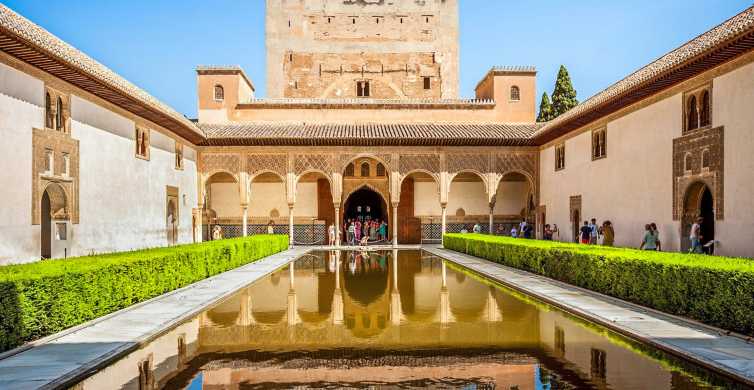
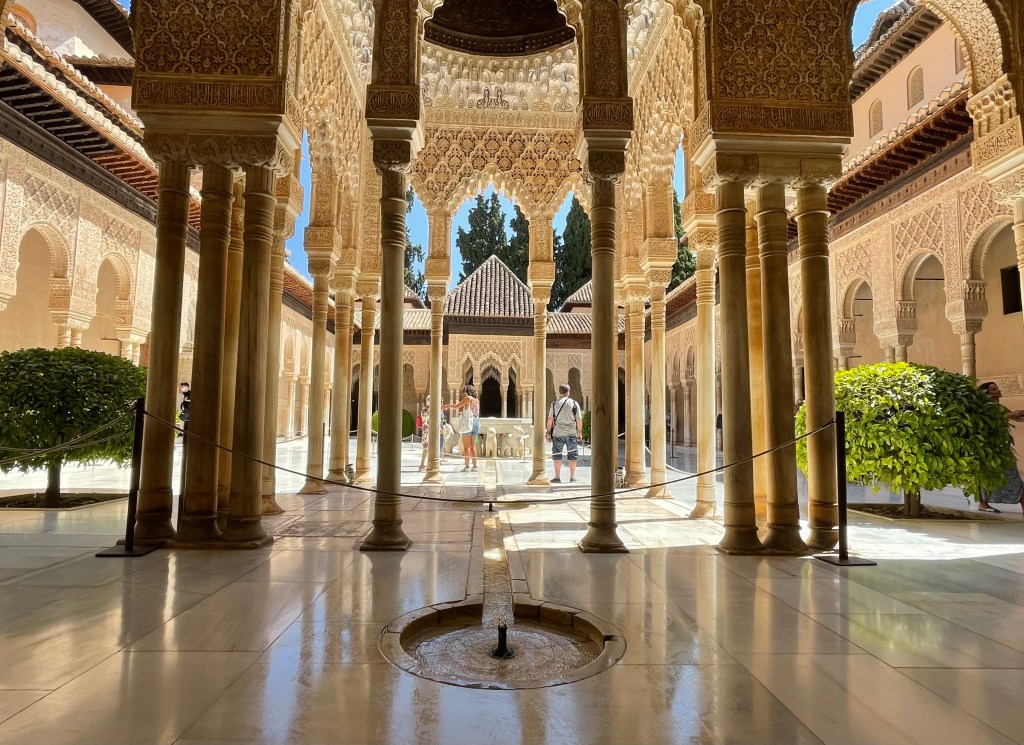
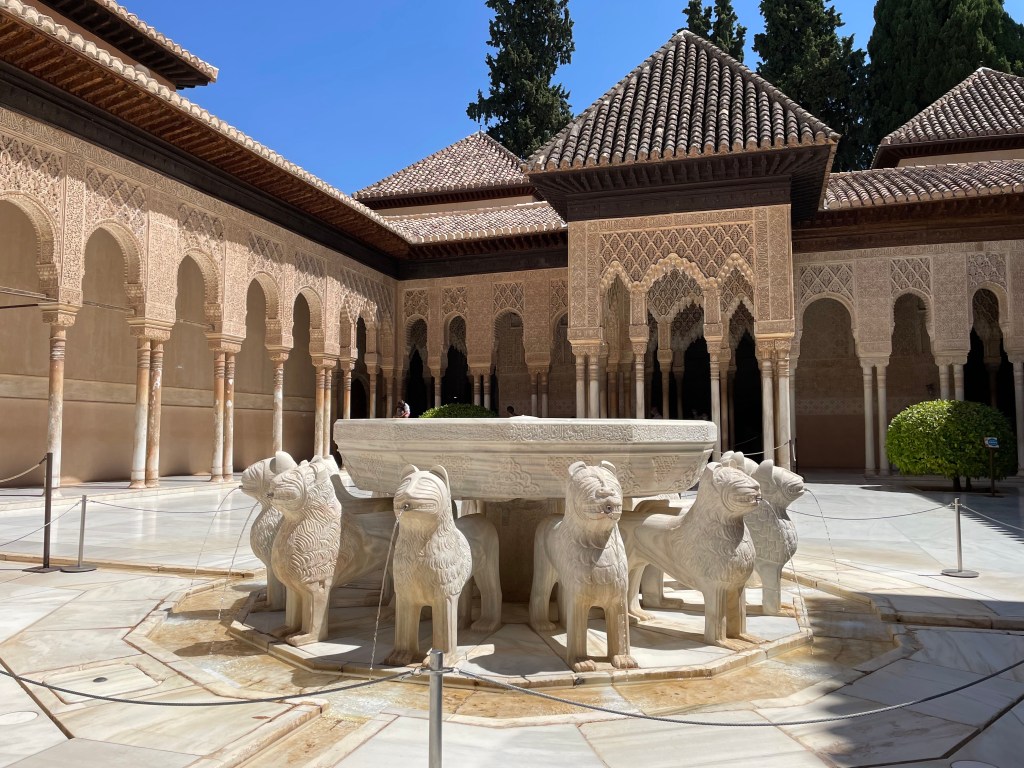
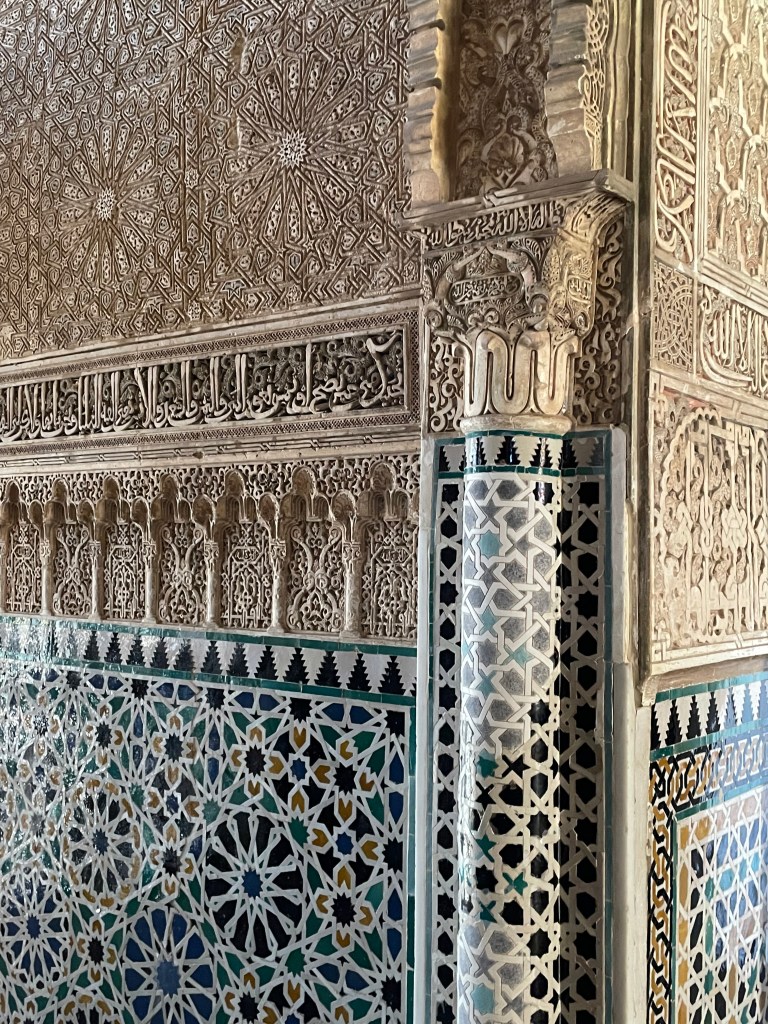
The Muslims introduced new technology in agriculture as well as new crops from Africa: oranges, pomegranates, figs, dates and rice. Muslim designers and architects left their mark in cities like Seville, Granada and Cordoba. Some of their great creations are the Great Mosque of Cordoba (La Mezquita de Córdoba) in the city of Cordoba and the Alhambra Palace (La Alhambra) in the city of Granada.

Part 2
La Reconquista. 1469-1492 C.E.
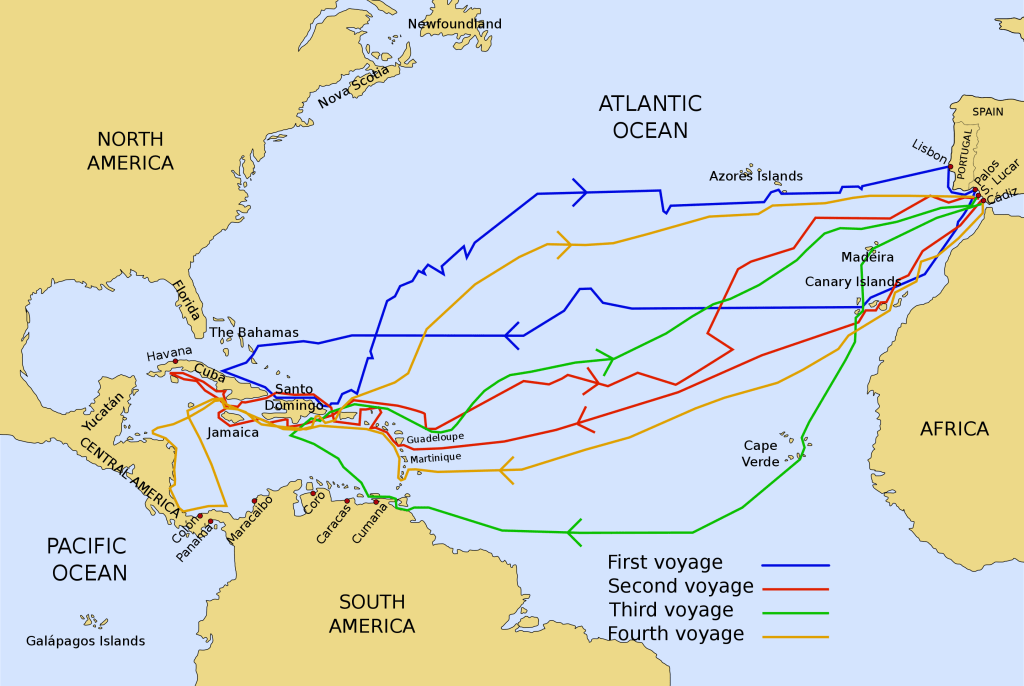
Christian forces took Spain from Muslim rule. In 1469, King Ferdinand of Aragon marries Queen Isabella I of Castille and this helps to unify all of their territories. They supported Christopher Columbus in his enterprise of the Indies. His arrival to what we know as the Caribbean in 1492 and later the north of South America helped to make Spain very rich with many new colonies.
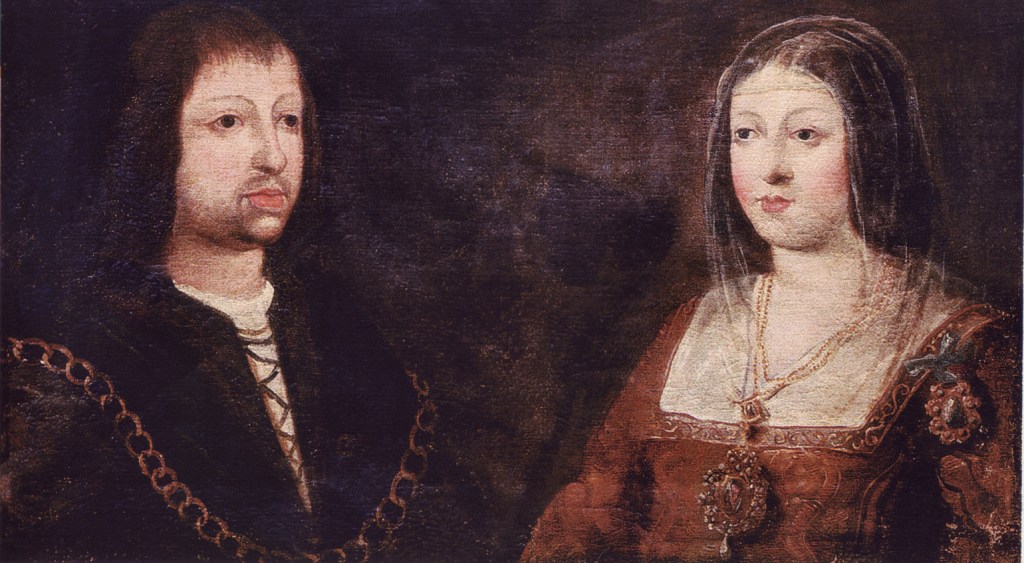
Cr. Wedding portrait of King Ferdinand of Aragon and Queen Isabella I of Castile. Anonymous. 1450
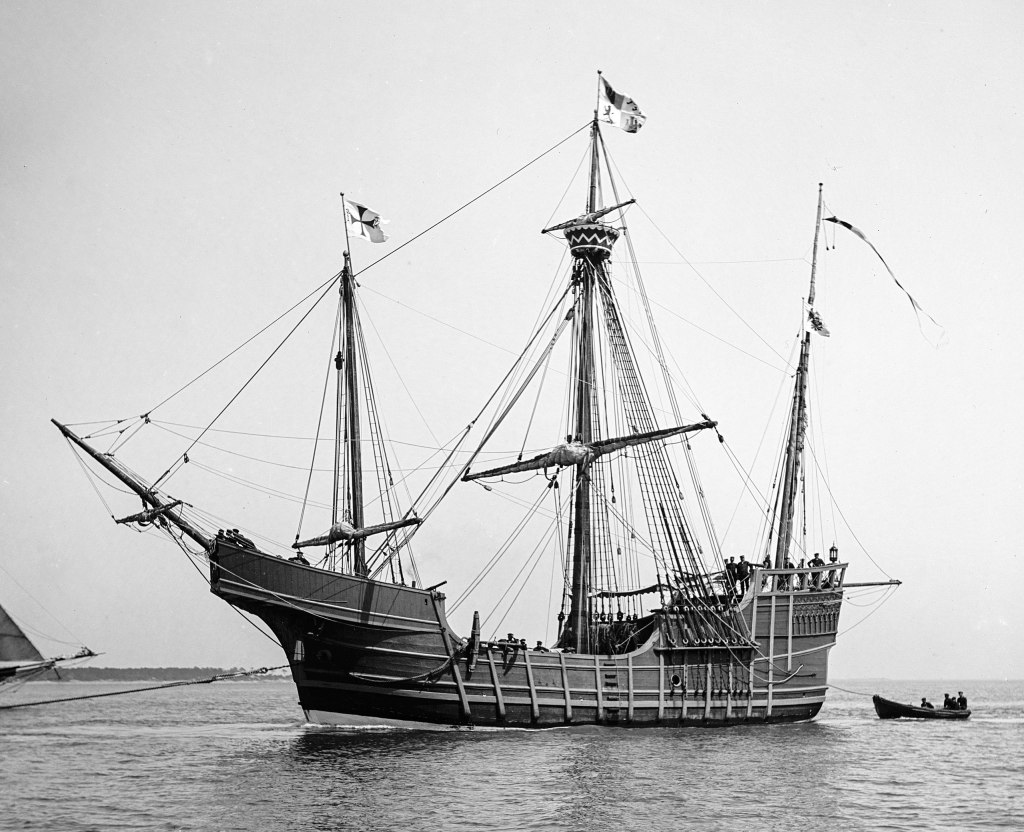
Christopher Columbus set off with three ships: La Pinta, La Niña y La Santa Maria. Below is a Replica of the Santa María, the largest ship. Cr. Wikimedia Commons, author and location unknown.
Cr. Wikimedia Commmons: Phirosiberia

A painting of Columbus meeting Isabella and Ferdinand after his first trip by Juan Cordero (1822–1884)
The Golden Age of Spain. 1516 – 1700 C.E.
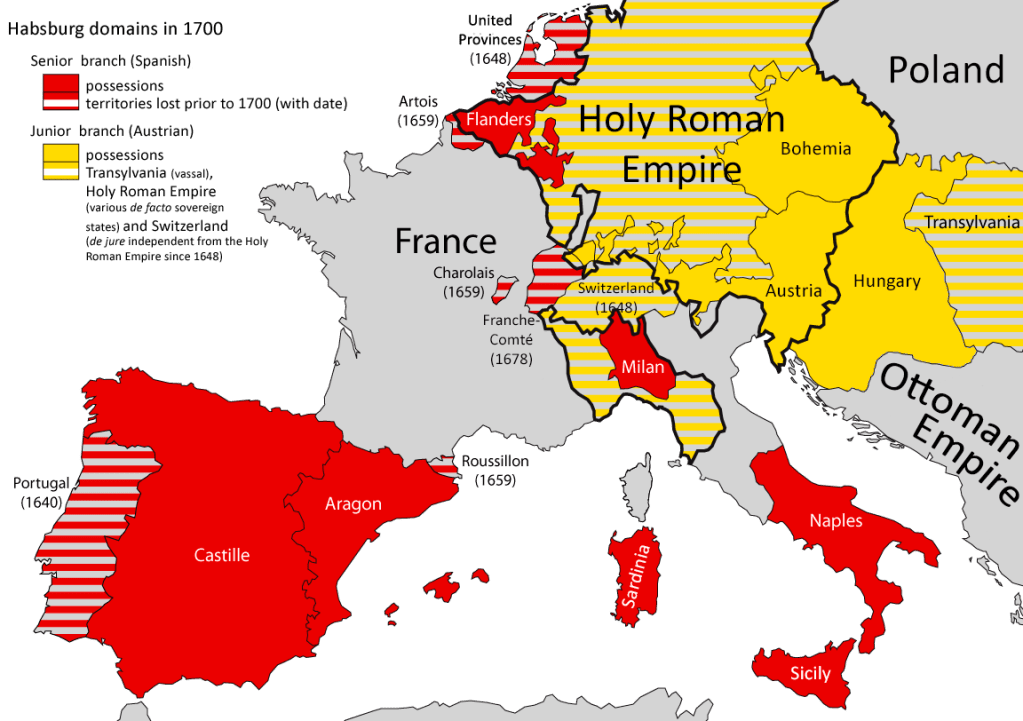
Carlos I of Spain / Karl V of Germany (grandson of queen Isabella) inherited both thrones ruling over many countries.

Below is a map of Carlos I’s territories:
The power and riches helped the culture of Spain flourish in its Golden Age.
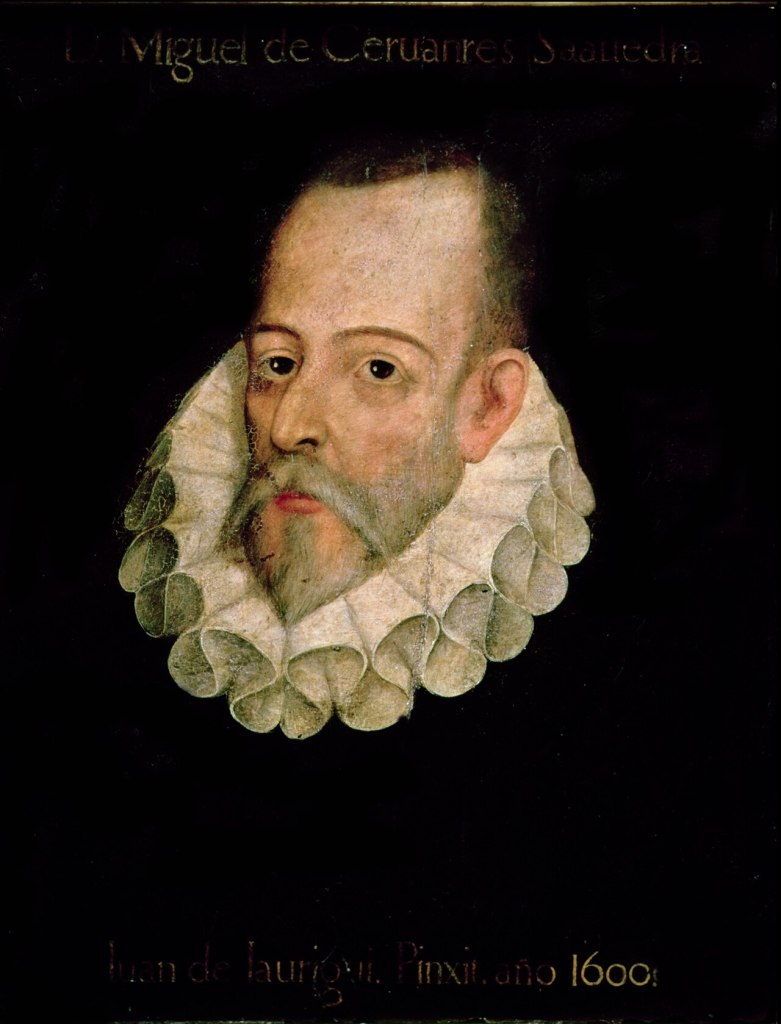
Miguel Cervantes publishes “Don Quijote de la Mancha,” an epic novel about a knight and his adventures. It was originally published in two parts, in 1605 and 1615. It is considered a founding work of Western literature, often labelled as the first modern novel.

Bronze Sculpture of Don Quijote and Sancho Panza by Lorenzo Coullaut Valera made between 1925 y 1930. It is a detail of the monument dedicated to Cervantes at the Plaza de España in Madrid, Spain.
Juan de Herrera created beautiful buildings and spaces like “La Plaza Mayor” (The main public square) in 1581.
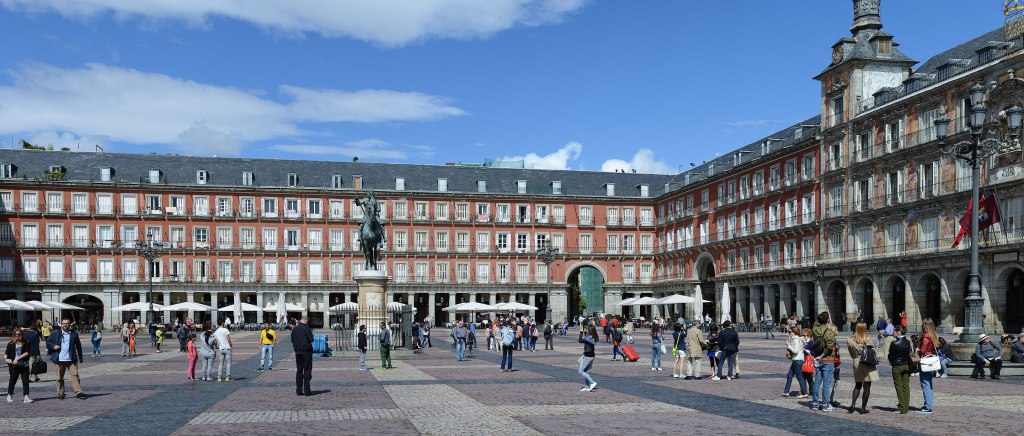
By the 1700’s this map shows in blue all the land that Spain had in the world:

But as Spain flourished many people in the colonies did not. The arrival of Christopher Columbus and the subsequent waves of Europeans (Spanish, Portuguese, French, English, Dutch, etc.) to the Americas brought new sicknesses to its native people including smallpox, measles, mumps, whooping cough, influenza, chicken pox, and typhus. The results were devastating and millions of people died. The natives also had to work so very hard for these newcomers giving them food, clothing, gold/silver, etc.
It is important to clarify that these diseases were brought by all Europeans that came into the Americas thereafter, like the Portuguese, the English, the French and the Dutch (not just the Spanish). For example, the following is a page of a publication from the 1800’s about the destruction caused by Small Pox in Plymouth, Massachusetts in the 1600’s (brought by the Pilgrims from England).
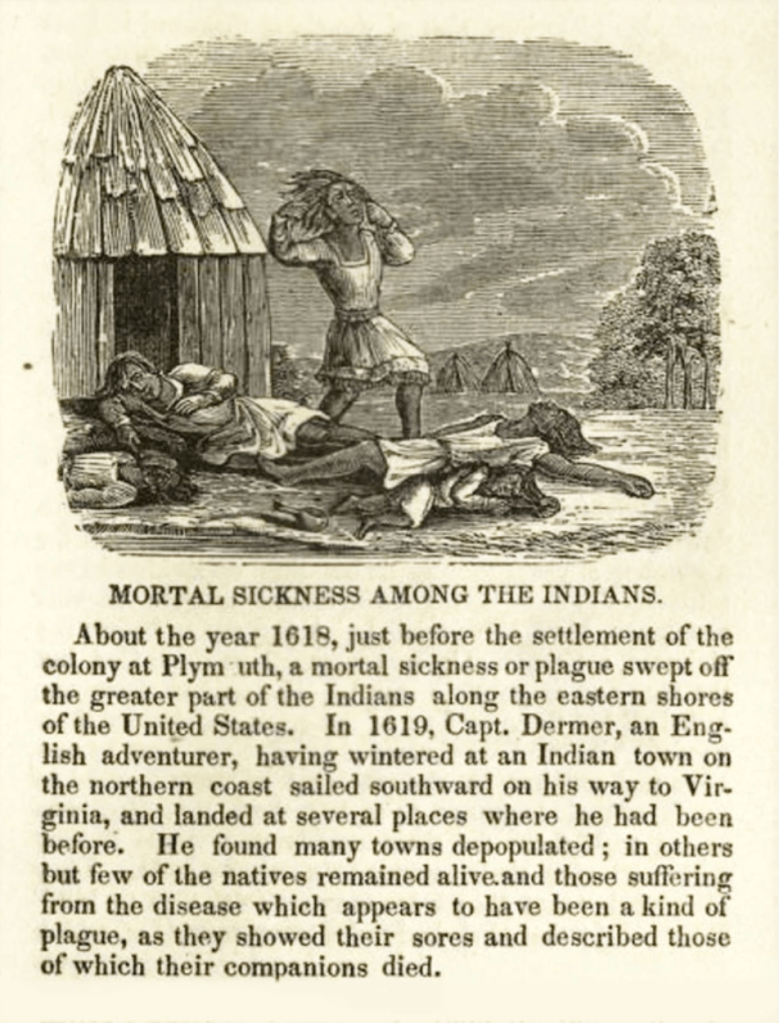
Cr. Native Americans Smallpox, 1853 acrylic print by Granger.
As the native population died the Portuguese established the Trans-Atlantic Slave Trade. Colonial powers wanted cheap labor in the form of enslaved African people to perform hard jobs like sugar farming and silver mining. Over the period of the Trans-Atlantic Slave Trade, from approximately 1526 to 1867, some 12.5 million captured men, women, and children were put on ships in Africa, and 10.7 million arrived in the Americas.
Bourbon Spain 1700-1931 / La España de los Borbones 1700-1931
When Charles II (Carlos II) of Spain dies without heir, Louis VIV of the Bourbon (A French King) dynasty placed his grandson Phillip V (Felipe V) on the Spanish throne. This diplomatic victory of Louis XIV unleashed the War of Succession (La Guerra de la Sucesión) between 1701-1714.
It was a very complicated war! There were two princes fighting for this throne… Felipe V had the support of France and Archduke Charles VI ( Carlos VI) (son of the emperor Leopold of Austria) had the support of England and Holland. Here they are:
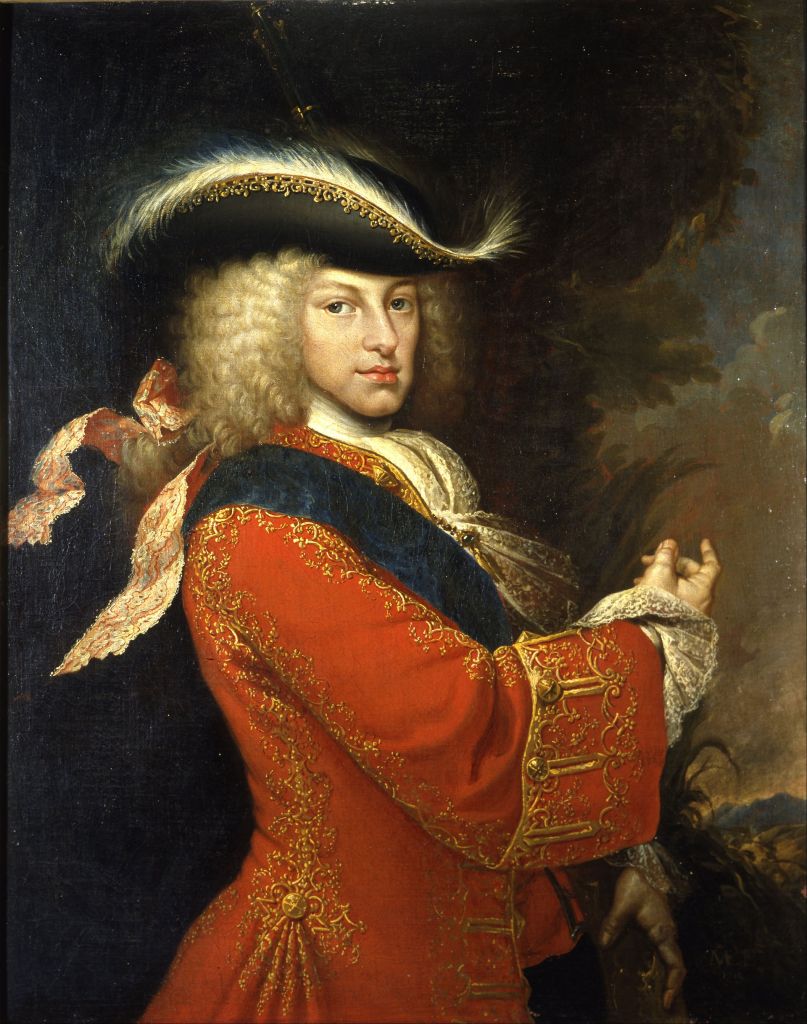

Who won? Both kinda… but not really. The great winner went onto be the British. In 1713 they created the Treaty of Utrecht that stated that Spain and France would never be united under one ruler. (This was to diminish their power and gave the British more power.) Philip V was confirmed as King of Spain and went on to rule for a total of 24 years there, but he was removed from the French line of succession. And Charles VI ruled the Holy Roman Empire for 29 years. With this treaty Spain also lost the Rock of Gibraltar, a very important water route from the Atlantic to the Mediterranean Sea to the British.
In 1808 Napoleon Bonaparte invaded Spain and placed his brother in the Spanish throne. The Spanish and the British unite and defeat the French at the battle of Vitoria in 1813. After many revolts the monarchy is restored to Ferdinand VII (Fernando VII). The Bourbon Dynasty continues today with the King Felipe VI.

Cr. Joseph Bonaparte by François Gérard, 1800
1931 – 1936. Spanish Civil War.
During this time Spain was trying to figure out how to have a Republic and not a Monarchy rule their country. This led to huge disagreement about who should be in charge. Some people wanted things to stay the same (Monarchy), while others wanted changes (Republic). This disagreement turned in 1936, into a war.
The Spanish Civil War (1936-1939) was a brutal conflict between two sides:
Republicans: Loyal to the leftist, democratically-elected Popular Front government. Included socialists, communists, anarchists, and some regionalists.
Nationalists: A mix of conservatives, monarchists, fascists (Falange party), and the military led by General Francisco Franco.
Estimates of the dead during the Spanish Civil War vary, but most sources place it around 500,000. This number doesn’t include those who died from malnutrition, disease, or war-related hardships.
Pablo Picasso paints his famous “Guernica” (1937) that depicts the horror of this war:

The war was won by the Nationalists led by General Francisco Franco.
Part 3
The Franco Years 1939-1975
General Francisco Franco was a dictator and is said to have ruled Spain with an “iron fist” for nearly 40 years. The first decade of Franco’s rule was very hard on the lower working classes. These times slowed down the industrial development of the country due to a low agricultural output.
Franco wanted a Spain that was united under his rule so he took away the rights of the Catalan, Galician and Basque provinces and outlawed the use of their languages. He also persecuted and took away the rights of anyone who was against his regime. Because of this Spain was isolated and did not have much progress. It was when Franco opposed Comunism and allowed American military bases in its soil that Sapin began to be acknowledged by the Western world and wasadmitted into the United Nations in 1955.
In 1969, General Franco announced that Juan Carlos I, the Grandson of Alfonso XIII of Bourbon, would be his successor. Franco felt that rule by the monarchy best suited Spain.
Franco died in 1975. Due to his human rights record, in 2007, the Spanish government removed all statues, memorials, street names and symbols related to his regime in Spain.
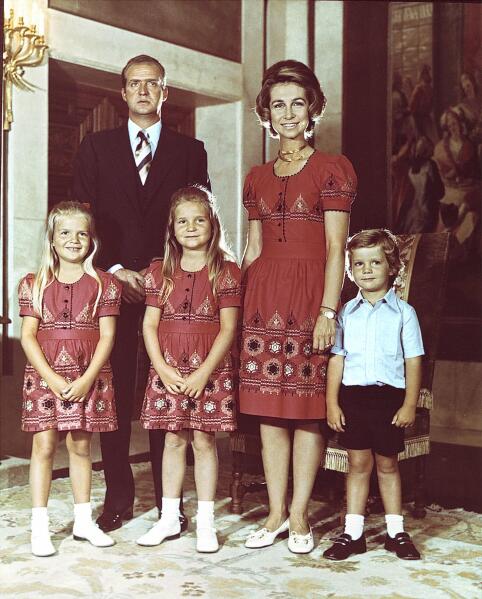
King Juan Carlos I with his wife the Queen Sofia of Greece and Denmark. On the right side is the current King Felipe VI when he was a little boy.
Juan Carlos and Democracy 1975 – Current Times
When Juan Carlos I, the grandson of King Alfonso XII became king in 1975, he changed the framework of the government to install one that represented the people, a true democracy in Spain. He passed the constitution of 1978 that guaranteed the autonomy of the nationalities and regions in Spain. This led to the formation of the current 17 autonomous communities of Spain.

Cr. Wikimedia Commons, by Rodriguillo, edited by Nnemo. 2007
The Spanish Socialist Worker’s Party, PSOE (Partido Socialista Obrero Español) won the 1982 elections with Felipe Gonzalez as the prime minister. He was re-elected during the next 3 elections and stayed as prime minister for 14 years (1982-1996). Socialist programs sparked an economic recovery and Spain is granted entry to the European Union in 1986.

In June 2014, Juan Carlos, citing personal reasons, abdicated in favour of his son, who acceded to the throne as Felipe VI. These are photos of King Felipe VI through time:

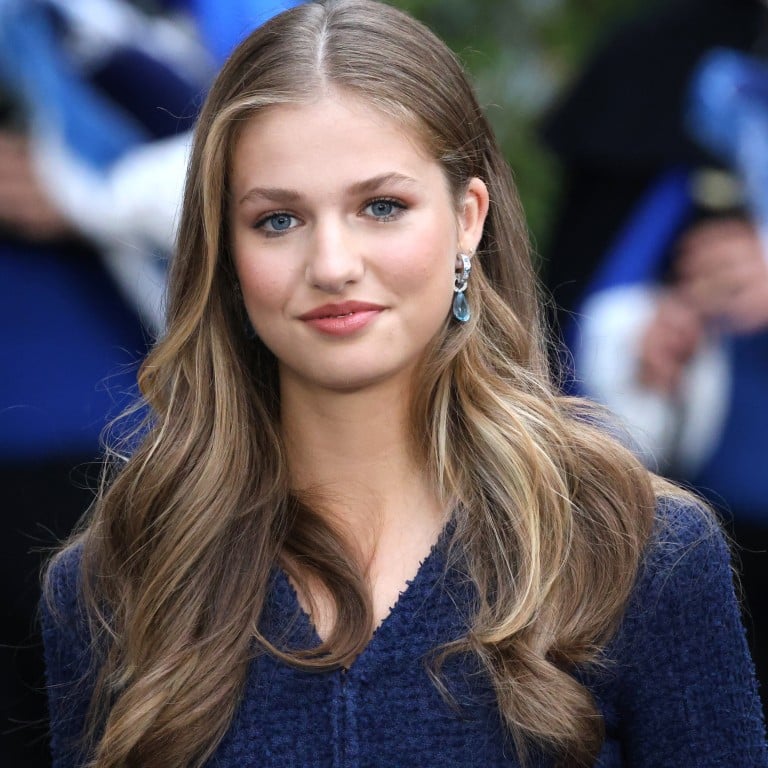
His daughter Leonor, Princesa de Asturias is the heiress presumptive to the Spanish throne. She would be the first Queen of Spain since 1868. As of October of 2023 she is 18 years old:
Pedro Sánchez Pérez-Castejón, born 29 February 1972 has been Spain’s Prime Minister since June 2018. He has also been the Secretary-General of the Spanish Socialist Workers’ Party (PSOE) since June 2017.
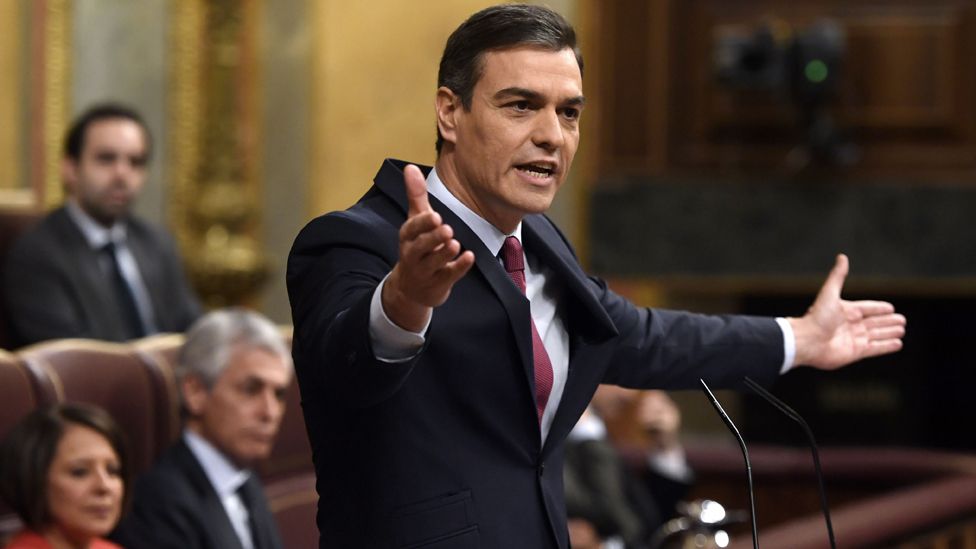
Pedro Sánchez Pérez-Castejón, the current Prime Minister of Spain.
Spain's History to be continued...
 Alphabet Space